


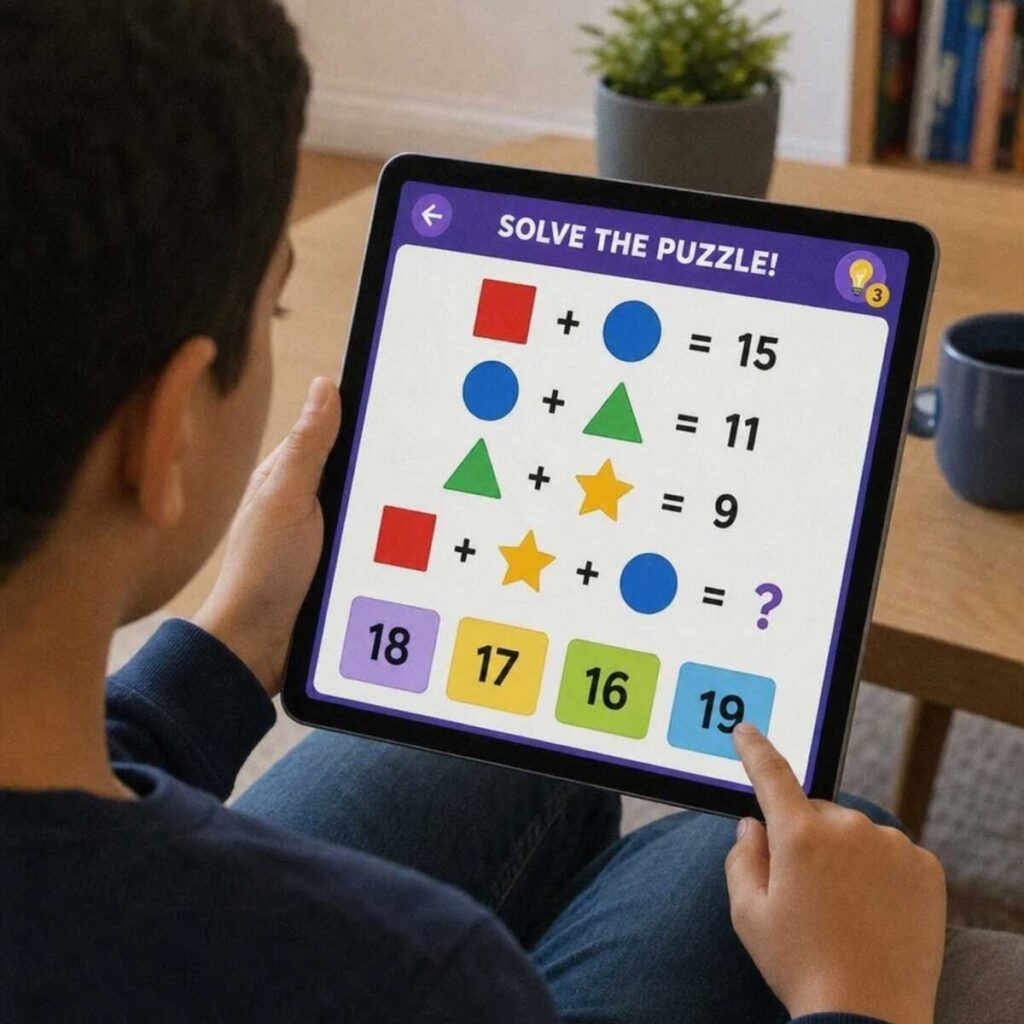
Extreme math games are brain-stretching activities that turn numbers, logic, speed, patterns, and strategy into something you actually want to keep doing. They can be played alone, with friends, in a classroom, on paper, or through interactive math games online. The goal is not to make math feel scary or impossible. The goal is to give your mind a workout that feels playful, focused, and surprisingly satisfying. Browse the Best info about prediksi togel.
If you have ever enjoyed a puzzle, a timed challenge, a strategy game, or even a tricky riddle, you already understand the appeal. Extreme math games take that same energy and add mathematical thinking in a way that builds skill without feeling like a worksheet.
What are extreme math games?
Extreme math games are challenging math-based activities that push you beyond basic practice by adding speed, strategy, problem solving, logic, competition, creativity, or unusual rules. They are “extreme” not because they are only for math experts, but because they make your brain work harder than ordinary drills. A good extreme math game asks you to think, test ideas, recover from mistakes, and try again with a sharper plan.
That matters because math is not just memorizing formulas. Math is also noticing patterns, making decisions, choosing efficient steps, and staying calm when a problem looks messy. Extreme math games help with all of that. They give you a safe place to struggle a little, which is where real learning often begins.
Here is the simple version: regular practice builds accuracy, while extreme math games build flexibility. You are not just answering questions. You are learning how to think when the answer is not obvious right away.
These games can include:
- Timed arithmetic races that test speed and focus
- Logic puzzles that require careful reasoning
- Number strategy games where every move matters
- Pattern challenges that ask you to predict what comes next
- Geometry games built around shapes, angles, and space
- Probability games where you make choices under uncertainty
- Multi-step puzzles that combine several skills at once
- Interactive math games that respond to your choices and progress
The best part is that you can adjust the difficulty. A child, teen, adult, teacher, parent, or lifelong puzzle fan can all enjoy the same basic idea at different levels. You can start with simple number puzzles and gradually move into deeper fun math challenges that make you pause, think, and grin when the answer finally clicks.
The real value of hard math play
Hard math play sounds like a contradiction, but it is actually one of the most useful ways to learn. When a challenge is too easy, your mind coasts. When it is impossibly hard, your mind shuts down. But when it is just hard enough, you enter that sweet spot where effort turns into progress.
That sweet spot is where extreme math games shine. They make you use math in motion. Instead of staring at a page of similar problems, you respond to changing conditions. You might race the clock, compete against another player, unlock the next level, or solve a puzzle with only a few moves available.
This kind of challenge builds more than math knowledge. It builds habits that help in school, work, writing, planning, budgeting, coding, cooking, and everyday decisions. That is because math games often strengthen the mental skills underneath the numbers.
Focus improves through clear goals
A strong game gives you a clear target. Solve the puzzle. Beat the timer. Find the pattern. Use fewer moves. Reach a higher score. That kind of clear goal helps your attention settle down.
In regular study, it is easy to drift. You may start thinking about your phone, your snack, or the twenty other things waiting for you. A good game pulls you back because every move has a consequence. You are not just passively receiving information. You are doing something with it.
Confidence grows through repeated attempts
Many people think they are “bad at math” because they remember feeling stuck, embarrassed, or rushed. Extreme math games can soften that feeling because trying again is part of the design. You miss, reset, adjust, and improve.
That loop is powerful. It teaches your brain that a wrong answer is not the end of the story. It is feedback. Once you start seeing mistakes as clues, math becomes much less intimidating.
Strategy becomes visible
In a worksheet, two people may get the same answer but use totally different thinking. In a game, strategy becomes easier to notice. You can see which moves save time, which choices create problems later, and which shortcuts actually work.
That makes games useful for learners of all ages. They reveal the thinking process, not just the result. And once you can see your own strategy, you can improve it.
Types of extreme math games to try
There is no single style of extreme math game. Some are fast. Some are slow. Some are competitive. Some are quiet and puzzle-like. The trick is to match the game to the kind of thinking you want to practice.
Below are several useful categories. You do not need to try all of them at once. Pick one that sounds fun, start small, and increase the challenge as you get more comfortable.
Speed-based number games
Speed games focus on quick recall and mental agility. These are the games where you solve as many problems as possible before time runs out, race another player, or try to beat your own record.
They work well for practicing addition, subtraction, multiplication, division, fractions, percentages, and mental estimation. The time pressure adds intensity, but it should not feel cruel. If the timer makes you panic, extend the time or lower the difficulty.
Try these simple speed challenges:
- Solve twenty multiplication facts as quickly as possible, then try to beat your time tomorrow.
- Pick a target number, such as 100, and create it using four random numbers.
- Start at 3 and keep doubling until you make a mistake.
- Count backward from 500 by 7s or 13s.
- Estimate the answer first, then calculate exactly and compare.
Speed games are great for warming up the brain. They help basic facts become more automatic, which frees your mind for harder problems later.
Logic and deduction puzzles
Logic games are slower and deeper. They ask you to reason carefully from clues. Instead of calculating quickly, you eliminate possibilities, test assumptions, and keep track of what must be true.
These games are useful because they train patience. You learn not to grab the first answer that looks right. You learn to ask, “What do I know for sure?” and “What follows from that?” Those questions are gold in math.
Examples include number grids, clue-based puzzles, balance puzzles, truth-and-lie riddles, and pattern deduction games. You can also turn ordinary number problems into logic puzzles by adding limits, such as “solve this using exactly three steps” or “find all possible answers.”
Strategy games with numbers
Strategy games combine planning and math. You may need to count moves, calculate risk, predict an opponent, or manage limited resources. These games often feel less like school math and more like decision-making.
Board games, card games, dice games, and digital puzzle games can all fit here. The math may be visible, like adding points, or hidden, like choosing the move with the best probability. Either way, the player is practicing useful reasoning.
A simple number strategy game can be built with almost nothing. Choose a target number, such as 50. Two players take turns adding 1, 2, 3, 4, or 5. Whoever reaches exactly 50 wins. At first, it feels like counting. Then you start noticing winning positions, backward planning, and control.
That is the beauty of these games. They start easy, then quietly become deep.
Geometry and spatial challenges
Geometry games use shapes, space, measurement, angles, symmetry, area, and movement. They are especially helpful for people who think visually. Instead of only working with symbols, you can rotate, build, fold, draw, and compare.
Try puzzles where you create shapes from smaller pieces, identify hidden angles, build structures, tile a surface, or move through a grid using limited directions. These activities build spatial reasoning, which is useful in art, design, construction, engineering, navigation, and many everyday tasks.
For a quick challenge, draw a square and divide it into four equal areas in as many different ways as possible. Then try with a triangle. Then try using curved lines. The math is simple at first, but the thinking becomes creative fast.
Probability and risk games
Probability games help you think about chance. They are excellent because they show that math is not always about certainty. Sometimes it is about making the best choice with incomplete information.
Dice games, card games, spinner games, and prediction challenges all work well. You can ask questions like: What outcome is most likely? Is this game fair? When should I take a risk? How many trials do I need before I trust the pattern?
These games are especially useful for real life. We make probability judgments all the time, even when we do not call them math. We compare options, weigh risk, and decide whether a choice is worth it.
Multi-step puzzle adventures
Some extreme math games combine several skills at once. These might include escape-room-style puzzles, digital adventure games, mystery challenges, or classroom quests. To move forward, you may need to solve equations, read clues, decode patterns, use coordinates, and make logical decisions.
These games are exciting because they give math a purpose. You are not solving for the sake of solving. You are unlocking something, finding a path, or completing a mission. That extra layer of context can help reluctant learners stay engaged.
The key is to keep the instructions clear. A puzzle can be difficult, but the goal should not be confusing. If players spend more time figuring out what the directions mean than solving the math, the game needs adjustment.
How do you choose the right challenge level?
Choose a challenge level that makes you think hard but still lets you make progress after a few tries. If you solve everything instantly, raise the difficulty. If you feel completely lost after several attempts, lower the difficulty or break the game into smaller steps.
This is one of the most important parts of using extreme math games well. The best challenge is not the hardest one you can find. It is the one that keeps you engaged long enough to improve.
A useful rule is the “stretch, not snap” rule. Your brain should stretch. It should not snap. You want a little frustration, not total defeat.
Signs the level is too easy
A game may be too easy if you can play without thinking much. That does not mean it is useless. Easy games can be good for warm-ups, confidence, and review. But if your goal is growth, you need some resistance.
Watch for these signs:
- You answer almost every question automatically.
- You never need to change strategy.
- You stop paying attention because the pattern is too predictable.
- Your score improves only because you move faster, not because you think better.
- You feel bored instead of focused.
When that happens, add a twist. Shorten the timer, increase the numbers, add a rule, require mental math, or ask for more than one solution.
Signs the level is too hard
A game may be too hard if you cannot tell where to begin. This can happen when there are too many rules, unfamiliar symbols, or huge jumps in difficulty. A hard game should still offer a foothold.
Look for these signs:
- You feel stuck before making the first move.
- You keep guessing randomly.
- You cannot explain why an answer is right or wrong.
- You feel anxious, angry, or embarrassed.
- You quit before learning anything from the attempt.
When that happens, simplify. Use smaller numbers, remove the timer, read an example, work with a partner, or solve a similar but easier puzzle first.
Signs the level is just right
The right level usually feels active. You are thinking. You are making mistakes, but they teach you something. You may need a hint, but you do not need someone to do the whole thing for you.
Look for these signs:
- You can start, even if you cannot finish quickly.
- You improve after each round.
- You notice patterns or shortcuts.
- You can explain at least part of your strategy.
- You want to try again after failing.
That last one matters. A strong challenge should make you curious enough to return.
A simple method for playing better
You can get more value from fun math challenges if you use a clear process. This does not need to feel formal. Think of it as a small routine that helps you learn from every round instead of just rushing from one attempt to the next.
Here is a five-step method you can use with almost any math game.
1. Learn the goal before playing fast
Before you try to win, make sure you understand the goal. What counts as success? Are you trying to get the highest score, use the fewest moves, solve within a time limit, or find every possible answer?
This sounds obvious, but many players skip it. Then they lose because they are playing the wrong game in their head. Take a minute to read the rules, study an example, and say the goal in your own words.
2. Play one slow practice round
Your first round should not be about speed. It should be about understanding. Move slowly, notice the rules, and pay attention to what creates progress.
If you are playing online, this is where interactive math games can be especially helpful. Many give instant feedback, hints, levels, or visual responses. Use that feedback. Do not just click past it.
3. Name the strategy you are using
After a round, ask yourself, “What was my plan?” If you did not have one, that is fine. Now you know what to improve.
You might name strategies like:
- I looked for the easiest numbers first.
- I worked backward from the target.
- I eliminated impossible answers.
- I grouped numbers to make mental math easier.
- I tested one idea, then adjusted.
- I saved risky moves until later.
Naming your strategy makes it easier to repeat, refine, or replace.
4. Change one thing at a time
When you want to improve, do not change everything at once. Choose one adjustment. Maybe you slow down. Maybe you estimate before calculating. Maybe you write down key numbers. Maybe you try working backward.
Changing one thing helps you see what actually made the difference. This is how good learners improve. They do not just practice more. They practice with attention.
5. Reflect for thirty seconds
After the game, pause for a short reflection. You do not need a notebook, though writing it down can help. Just ask three quick questions:
- What worked?
- What confused me?
- What will I try next time?
That tiny reflection turns a game into learning. It also keeps frustration from taking over, because you leave with a next step instead of just a score.
Ways to make ordinary math games more extreme
You do not always need a fancy app or complicated setup. You can take a basic math activity and make it more exciting by changing the conditions. This is useful for parents, teachers, tutors, study groups, or anyone who wants a quick challenge at home.
The secret is to add one layer of difficulty at a time. Too many twists can make a game messy. One good twist can make it fresh.
Add a timer
A timer instantly changes the energy. It encourages quick recall and decision-making. But use it carefully. Timers can motivate some players and stress out others.
Start with generous time, then shorten it only when the player is ready. You can also use a “beat your own time” format instead of competing against someone else. That keeps the pressure personal and less intimidating.
Add limited moves
Limited moves force strategy. Instead of solving however you want, you must plan. This works well with puzzles, number targets, geometry tasks, and equation-building games.
For example, ask players to reach 24 using four numbers and only three operations. Or ask them to transform one number into another using exactly five steps. Limits make choices matter.
Add unusual rules
Unusual rules make familiar math feel new. You might ban a certain operation, require every answer to be even, force players to use fractions, or make them explain each move before taking it.
Try rules like:
- You may only use addition and multiplication.
- You must use every number exactly once.
- You must solve without writing anything down.
- You get bonus points for finding more than one solution.
- You lose a point for every unnecessary step.
- You must explain your answer in plain language.
That last rule is underrated. If you can explain your math clearly, you probably understand it better than you think.
Add collaboration
Extreme does not always mean competitive. Collaboration can make a challenge richer because players share strategies. One person may notice a pattern. Another may catch an error. Another may suggest a more efficient route.
Try partner play where one person solves and the other asks questions. Or use team play where every member must contribute one step. This keeps people involved and makes the thinking visible.
Add creativity
Math becomes more interesting when players can create challenges for each other. Ask someone to design a puzzle, write clues, create a scoring system, or invent a new rule.
Creating a game requires deep thinking. You have to know what makes the challenge fair, solvable, and interesting. That is a powerful way to learn.
Good math challenge habits
The way you approach a game matters as much as the game itself. Strong habits help you stay calm, spot patterns, and learn faster. Weak habits can turn even a good game into a guessing session.
Here are practical habits that work across many extreme math games.
Read slowly before solving quickly
A lot of mistakes happen before the math begins. Players miss a rule, skip a condition, or assume the goal is something it is not. Reading slowly saves time later.
Before you start, underline or mentally note the important details. What numbers are given? What is being asked? Are there limits? Are there hidden conditions? This habit is simple, but it prevents plenty of unnecessary errors.
Estimate before calculating
Estimation is like a built-in error detector. Before you calculate exactly, make a rough guess. If your final answer is wildly different, you know to check your work.
This is especially useful in timed games. Estimation helps you reject impossible answers quickly. It also builds number sense, which is the ability to feel whether a number makes sense in context.
Look for structure
Many math challenges are easier when you notice structure. Are there pairs that add to 10, 50, or 100? Are there repeated shapes? Is there symmetry? Can a big problem be broken into smaller parts?
Structure is the difference between brute force and smart solving. Brute force means trying everything. Smart solving means noticing what reduces the work.
Keep track of failed attempts
It may sound strange, but failed attempts are valuable. They show you what not to repeat. In logic puzzles, especially, crossing out impossible options is often the main path to the answer.
If a game is complex, write down what you tried. You do not need long notes. A few marks, arrows, or crossed-out choices can keep your brain from circling the same mistake.
Explain your thinking out loud
Explaining your thinking is one of the fastest ways to find gaps. You may believe you understand a solution until you try to say it clearly. Then you notice the fuzzy parts.
You can explain to another person, to yourself, or even to an imaginary beginner. Use plain language. Avoid hiding behind fancy words. If you can teach the step, you understand the step.
Interactive math games and why they help
Interactive math games are useful because they respond to what you do. Instead of waiting for someone to mark your answers later, you often get immediate feedback. That quick response helps you connect your choice with the result.
This can make practice feel more alive. You click, drag, sort, match, build, estimate, or solve, and the game reacts. If you make a mistake, you can often try again right away. If you succeed, you may unlock a harder level or new puzzle type.
Of course, not every digital game is helpful. Some are just flashy quizzes with loud sounds. The best interactive math games make the math thinking clearer, not more hidden.
Look for games that include:
- Clear instructions before the challenge begins
- Difficulty levels that increase gradually
- Feedback that explains mistakes or shows the correct idea
- A balance of speed, accuracy, and strategy
- Visuals that support the math instead of distracting from it
- Chances to replay and improve
- Problems that vary enough to prevent memorizing only the answers
If a game makes you click quickly but does not make you think, it may be entertaining, but it is not doing much for your math growth. Choose games that ask for decisions, patterns, explanations, or strategy.
Fun math challenges you can play anywhere
You can build a solid math workout from simple materials: paper, pencil, dice, cards, coins, or just your own mind. These quick challenges are easy to adapt. Make the numbers smaller for beginners or add limits for advanced players.
Target number challenge
Choose four numbers and one target number. Use addition, subtraction, multiplication, division, parentheses, or exponents to reach the target. For example, use 2, 5, 7, and 9 to reach 50.
To make it easier, allow any operation and any number of steps. To make it harder, require every number to be used exactly once. To make it extreme, set a timer or ask for three different solutions.
Operation ban challenge
Pick a set of problems, then ban one operation. For example, solve without multiplication, or reach a target without subtraction. This forces flexible thinking.
The value of this challenge is that it breaks habits. If you always solve one way, the ban makes you find another path. That is a great way to build deeper understanding.
Number ladder challenge
Start with one number and transform it into another number through a series of steps. Each step must follow a rule. For example, start at 4 and reach 100. You may multiply by 3, add 4, or subtract 2 at each step.
This game builds planning. You can wander randomly, but the better approach is to think backward from the target. Working backward is a major problem-solving skill.
Pattern hunt challenge
Write a number sequence and ask players to find the rule. Begin with easy patterns, then combine operations. For example, a sequence might add 3, then double, then add 3, then double.
The best pattern challenges allow more than one possible rule at first, then add terms to narrow it down. This teaches an important lesson: a pattern is not proven by one lucky guess. It needs enough evidence.
Geometry build challenge
Use toothpicks, paper shapes, blocks, or drawings. Ask players to create a shape with certain conditions. For example, build three squares using ten sticks, or divide a rectangle into equal parts in two different ways.
This kind of challenge is hands-on and visual. It helps learners who may not love symbolic math but enjoy making and moving things.
Fair game challenge
Create a dice, coin, card, or spinner game. Then ask: Is it fair? If not, how can we change the rules to make it fair?
This is a sneaky but excellent probability lesson. Players must think about outcomes, likelihood, scoring, and balance. They also learn that game design is full of math.
A short checklist for better game design
If you are creating extreme math games for yourself, your family, a class, or a group, a quick checklist can save you from confusion. A game does not need to be perfect, but it should be clear enough that players know what to do and challenging enough that they care about the result.
Use this checklist before you play:
- The goal is clear in one sentence.
- The rules are short enough to remember.
- The first round can be played without a long explanation.
- The challenge uses real math thinking, not only guessing.
- Players can tell when they are improving.
- Mistakes give useful feedback.
- The difficulty can be adjusted up or down.
- The game has a reason to replay it.
- The scoring system, if there is one, feels fair.
- The game ends before players feel exhausted.
That final point is worth remembering. A challenge can be intense without dragging on forever. In fact, short and repeatable games are often better because players can try again with a new strategy.
Using extreme math games for learning without ruining the fun
The quickest way to ruin a game is to turn it into a lecture every five seconds. Learning matters, of course, but the game needs room to breathe. Let players experience the challenge before you explain everything.
If you are guiding someone else, try asking questions instead of giving answers right away. Questions help the player stay in control of the thinking.
Useful questions include:
- What do you notice?
- What have you already tried?
- Is there a smaller version of this problem?
- What would happen if you worked backward?
- Which move gives you the most options next?
- How do you know that answer works?
- Can you find another way?
These questions are simple, but they do a lot. They move attention from “Did I get it right?” to “How am I thinking?” That shift is where real confidence grows.
It also helps to celebrate good thinking, not just correct answers. A player who uses a smart strategy but makes a small calculation mistake is still learning well. Notice the strategy. Then fix the error.
Common mistakes to avoid
Extreme math games are supposed to challenge the mind, but a few common mistakes can make them frustrating or less useful. The good news is that these mistakes are easy to fix once you spot them.
Making the game too complicated
A complicated game is not always a better game. If players need ten minutes of instructions before they can begin, the design may be overloaded. Good games usually have simple rules and deep choices.
Start with one main idea. Add difficulty through numbers, timing, limits, or strategy, not through a pile of confusing rules.
Focusing only on speed
Speed is exciting, but it is not the whole story. Some learners think deeply but need more time. If every game is timed, they may start to believe they are bad at math when they are actually careful thinkers.
Mix fast games with slow puzzles. Practice quick recall, but also give space for reasoning, explanation, and creativity.
Treating mistakes as failure
Mistakes are part of the game. If every wrong answer feels embarrassing, players will avoid risk and stop experimenting. That blocks learning.
Try using language like “That attempt showed us something” or “Now we know that path does not work.” It sounds small, but it changes the mood.
Skipping reflection
Playing ten rounds without reflection can be fun, but it may not lead to much improvement. A short pause after each round helps players notice what changed.
Ask what worked, what did not, and what to try next. Keep it casual. The reflection should support the game, not slow it to a crawl.
Building a simple weekly math game routine
If you want the benefits without making it a huge project, create a small weekly routine. You do not need hours. A few focused sessions can build skill over time, especially if the challenges are varied.
Here is an easy routine:
- Warm up for five minutes. Use quick mental math, flash facts, estimation, or a short number race.
- Play one main challenge for fifteen minutes. Choose a puzzle, strategy game, interactive math game, or target number activity.
- Raise or lower the difficulty. Add a timer, remove a rule, use bigger numbers, or simplify if needed.
- Reflect for two minutes. Ask what strategy worked and what to try next time.
- End with one satisfying win. Finish with a challenge that feels achievable so the session ends on a strong note.
This routine works because it balances practice, challenge, adjustment, and reflection. It is simple enough to repeat and flexible enough to stay interesting.
You can also rotate themes by day or week. One session might focus on speed. Another might focus on logic. Another might use geometry or probability. Variety keeps the brain from getting too comfortable.
Making math games social
Math can feel lonely when it is only a person and a page. Games can change that. They give people something to talk about, argue over, test, and laugh about.
Social math play works especially well when the goal is shared. Teams can solve a puzzle together, design a fair game, or compete against the challenge instead of against each other. This keeps the mood friendly while still adding energy.
For group play, try these formats:
- Pair solving: One person explains each move while the other checks the logic.
- Team relay: Each player completes one step before passing the problem along.
- Puzzle design swap: Each person creates a challenge, then trades with someone else.
- Strategy discussion: Players solve separately, then compare methods.
- Class or family leaderboard: Track personal improvement instead of only top scores.
The best social format depends on the group. Some people love competition. Others prefer cooperation. You can use both, but keep the focus on thinking and improvement.
Why these games are not just for kids
It is easy to assume math games are mainly for children, but adults can benefit from them too. Mental flexibility does not stop being useful after school. In fact, many adults enjoy extreme math games because they feel like puzzles, not homework.
Adults use math thinking constantly. We estimate costs, compare deals, manage time, read charts, plan projects, judge risk, and solve everyday problems. Games sharpen the same habits in a low-pressure way.
They are also a nice alternative to passive screen time. Instead of scrolling, you can spend ten minutes on a puzzle that wakes up your attention. You do not need to become a mathematician. You just need to enjoy the stretch.
Families can also use math games across ages. Older players can handle bigger numbers or stricter rules, while younger players use simpler versions. Everyone plays the same core game, but the challenge adjusts.
Final takeaway
Extreme math games turn practice into active thinking. They make math feel less like a list of problems and more like a set of challenges you can explore, adjust, and improve at over time. Whether you prefer paper puzzles, group competitions, strategy games, or interactive math games, the best choice is the one that keeps you curious and willing to try again.
Start small. Pick one challenge, play it slowly, notice your strategy, and raise the difficulty when you are ready. That is how fun math challenges become more than entertainment. They become a steady, enjoyable way to build a sharper mind.