


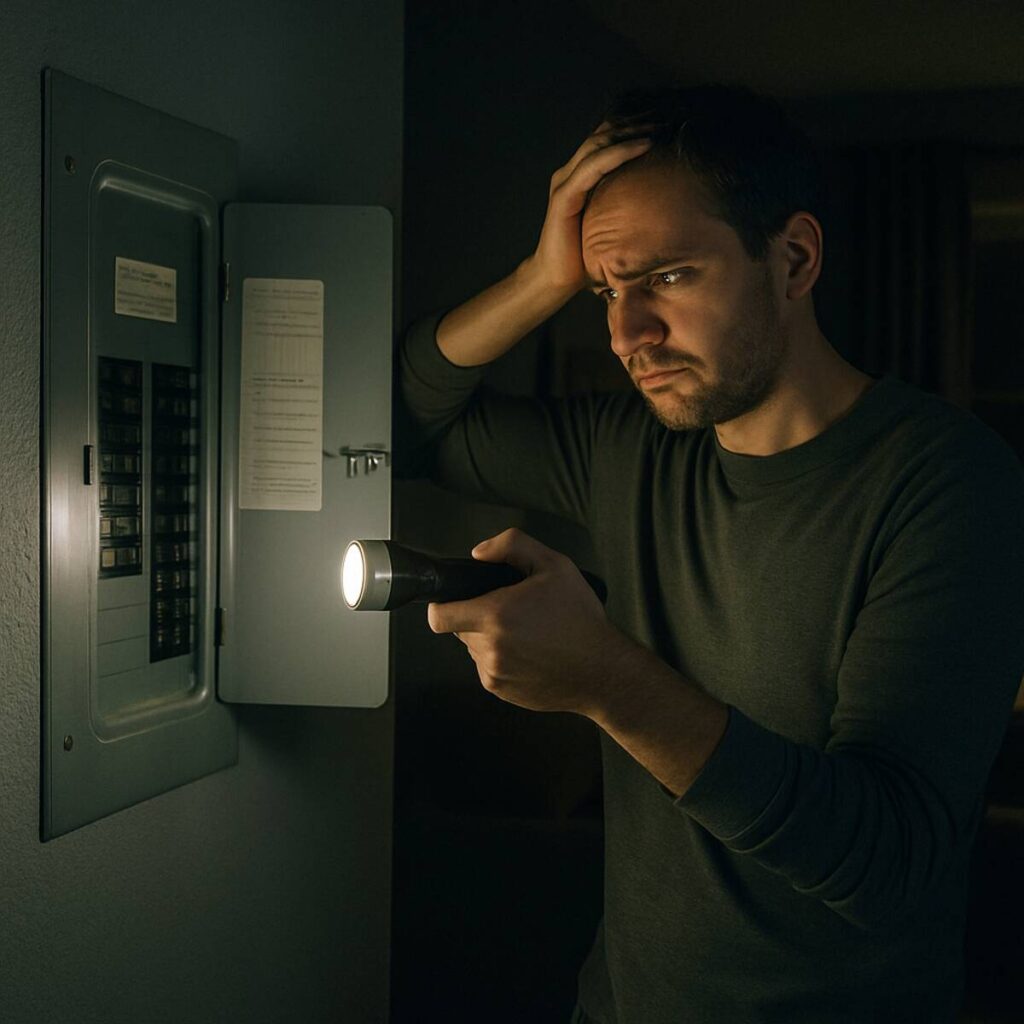
Picture this: It is 2:00 AM on a freezing Tuesday morning. You are jolted awake by a loud popping sound coming from the hallway, followed immediately by the acrid, unmistakable scent of melting plastic. Suddenly, half the lights in your home go dark, and the heating system shuts off. Panic sets in. You are faced with a homeowner’s worst nightmare—a sudden electrical crisis. The best guide to finding electrician Highlands Ranch CO.
In moments like these, knowing exactly who to call and what steps to take can mean the difference between a minor inconvenience and a catastrophic disaster. Electricity is the invisible lifeblood of our modern homes, powering everything from our refrigerators to our home offices. But when it malfunctions, it becomes an invisible threat.
Navigating the high-stakes world of sudden electrical failures requires a clear head and a solid plan. You need an expert emergency electrician who can diagnose and resolve the issue quickly, safely, and permanently. But how do you choose the right professional when you are under immense stress?
This comprehensive guide is designed to empower you with the knowledge you need. We will cover everything from identifying the early warning signs of a failing electrical system to understanding the qualifications of top-tier professionals. By the end of this extensive guide, you will be fully prepared to handle any electrical anomaly your home throws your way.
Understanding the True Nature of an Electrical Emergency
Before you pick up the phone to request an emergency electrical repair, it is crucial to understand what actually constitutes an emergency. Electricity demands respect, and certain situations require immediate, professional intervention.
Many homeowners tend to downplay electrical issues, hoping they will resolve themselves. Unfortunately, electrical problems never get better on their own; they only degrade further over time.
Knowing When to Call for Urgent Electrical Help
It can be difficult to differentiate between a minor nuisance and a critical hazard. A flickering light bulb might just mean the bulb is loose, but it could also indicate a severe voltage fluctuation in your home’s wiring. Knowing when to call for urgent electrical help is a skill every homeowner should cultivate.
You should seek immediate emergency assistance if you experience any of the following scenarios:
- Continuous Sparking: If an outlet, switch, or electrical panel sparks continuously or produces large, sustained flashes of light.
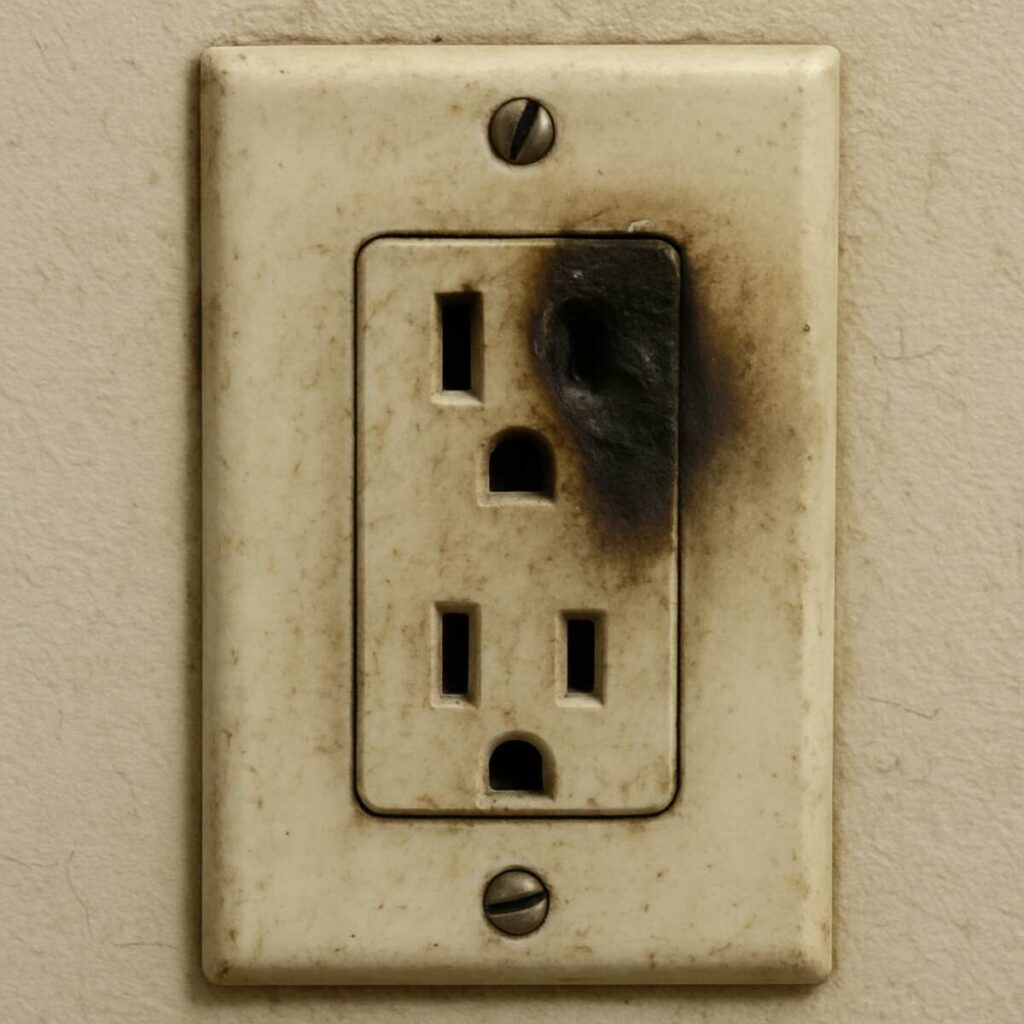
- Smoking or Scorched Outlets: Any visible smoke or black/brown scorch marks on your wall plates.
- Electrical Shocks: If you touch a switch, outlet, or an appliance and feel a tingling sensation or a mild shock.
- Sizzling or Buzzing Sounds: Healthy electrical systems are silent. Audible buzzing, humming, or sizzling from behind a wall indicates arcing—electricity jumping across a gap, which generates immense heat.
- Sudden Water Damage Near Wiring: A burst pipe or severe leak that comes into contact with your electrical panel or major wiring junctions.
The Warning Sign of a Burning Smell from Wall Outlet
One of the most terrifying sensory experiences in a home is detecting a burning smell from wall outlet. This odor is often compared to the smell of burning fish, melting plastic, or ozone.
When you notice this smell, it means that the plastic components of the outlet, the wire insulation, or the surrounding drywall are actively melting due to extreme heat generated by electrical resistance. This is usually caused by a loose connection inside the junction box, damaged wiring, or an overloaded circuit.
If you smell this:
- Do not plug or unplug anything from the affected outlet.
- Immediately go to your breaker box and shut off the power to that specific room.
- Call a 24/7 electrician immediately. Do not attempt to open the outlet cover yourself, as the wires behind it are likely live, brittle, and highly dangerous.
Navigating Urgent Power Outage Restoration
While a neighborhood-wide blackout is an issue for your local utility company, a localized power outage in your home is a different story. If your neighbors have lights, but your home is completely dark—or if half of your home suddenly loses power—you are dealing with a severe internal fault.
Urgent power outage restoration is required when a main breaker fails, a feeder line is damaged, or your electrical panel suffers a catastrophic failure. Prolonged localized outages can lead to spoiled food, burst pipes (in freezing weather), and compromised medical equipment. A rapid response from a qualified professional is critical to restoring your home’s habitability and safety.
Immediate Actions to Take During an Electrical Crisis
When disaster strikes, your immediate actions will dictate the safety of your family and your property. Before the professionals arrive, there are strict protocols you must follow.
How to Handle an Electrical Fire
Electrical fires are unique and incredibly dangerous because the ignition source (the electrical current) remains active even after the flames start. Knowing how to handle an electrical fire is paramount.
- Never Use Water: Water conducts electricity. Throwing water on an electrical fire will likely result in a severe, potentially fatal electric shock and can actually spread the fire further.
- Cut the Power: If you can do so safely, turn off the main breaker to your home. Cutting the power removes the source of the heat.
- Use the Right Extinguisher: Only use a Class C fire extinguisher (often a multi-purpose ABC extinguisher). Class C indicates that the extinguishing agent is non-conductive and safe for electrical fires.
- Smother Small Fires: If a small appliance catches fire and you have no extinguisher, you can try to smother it with a heavy wool blanket or baking soda—but only after the appliance is unplugged.
- Evacuate and Call 911: If the fire is spreading, generating thick smoke, or is inside a wall cavity, evacuate immediately. Do not try to be a hero. Get out and call the fire department.
Fixing Exposed Wires Safely (And Knowing When Not To)
During renovations, or after accidental damage to a wall, you might uncover bare electrical wires. When it comes to fixing exposed wires safely, the most critical rule is: Do not touch them.
“Fixing” them safely as a homeowner primarily means securing the area until a professional arrives.
- Assume the Wire is Live: Treat every wire as if it is carrying a lethal electrical current.
- Isolate the Power: Go to your electrical panel and turn off the breaker for that area.
- Test the Wire: Use a non-contact voltage tester (if you own one) to verify the power is off.
- Cap the Ends (Only if experienced): If you absolutely must temporarily safe the wire and the power is confirmed off, you can carefully cap the exposed ends with wire nuts and wrap them in high-quality electrical tape.
- Call a Pro: Ultimately, exposed wiring needs to be properly rerouted, placed in a junction box, or replaced by a professional. Never leave a “temporary fix” inside a wall cavity.
The Critical Role of a 24/7 Electrician
Electrical emergencies do not adhere to a Monday-through-Friday, 9-to-5 schedule. They frequently happen on weekends, holidays, and in the middle of the night. This is why having access to a reliable 24/7 electrician is non-negotiable.
What to Expect from 24/7 Electrical Repair Services
True 24/7 electrical repair services operate with a dedicated dispatch team and technicians on standby. When you make an emergency call, you should expect:
- Immediate Live Response: You should speak to a real person, not an answering machine.
- Triage over the Phone: The dispatcher will ask specific questions to assess the danger level and may walk you through shutting off your main power.
- Fully Stocked Trucks: Emergency technicians arrive in vehicles equipped with a wide variety of replacement parts—breakers, wiring, outlets, and testing equipment—to resolve the vast majority of issues on the spot.
Standard Response Time for Urgent Repairs
When smoke is billowing from a panel, every minute feels like an hour. Understanding the standard response time for urgent repairs helps manage expectations and aids in choosing the right company.
Typically, top-tier emergency electricians aim to be at your door within 60 to 90 minutes of your call. Factors that influence this include your distance from their dispatch center, current traffic/weather conditions, and the volume of simultaneous emergencies (such as during a severe severe storm). When vetting a company, always ask for their guaranteed emergency response time. If a company says they can get to you “sometime tomorrow” during a true emergency, hang up and call someone else.
Selecting the Right Emergency Electrical Repair Service
In a panic, it is tempting to click the very first Google result and hire whoever answers the phone first. However, inviting a technician into your home to work on complex, dangerous infrastructure requires careful consideration.
Relying on Local Licensed Electrical Contractors
There is immense value in hiring local licensed electrical contractors rather than large, national chains or out-of-town gig workers. Local contractors have a vested interest in maintaining their reputation within the community. Furthermore, local electricians are intimately familiar with your municipality’s specific building and electrical codes, which can vary wildly from one town to the next.
Local contractors also generally provide faster emergency response times simply by virtue of geographical proximity. Establishing a relationship with a local contractor for routine maintenance means you will have a trusted ally when a late-night emergency strikes.
Licensed Versus Unlicensed Electrical Work: A Dangerous Gamble
In an attempt to save money, some homeowners turn to neighborhood handymen or unlicensed workers for electrical repairs. This is an incredibly dangerous gamble.
The debate of licensed versus unlicensed electrical work is heavily skewed by risk.
- Unlicensed Work Risks: An unlicensed worker lacks the verifiable education and training to ensure complex circuits are balanced and grounded properly. If their work causes a fire, your homeowner’s insurance will almost certainly deny your claim, leaving you financially ruined. Furthermore, unlicensed work violates local building codes, which can result in heavy fines and make it impossible to sell your home later.
- Licensed Work Benefits: Licensed electricians carry liability insurance and workers’ compensation. They are legally accountable for their work. They pull the necessary permits and arrange for municipal inspections when required, ensuring complete safety and peace of mind.
Understanding Certified Master Electrician Qualifications
As you research contractors, you will frequently see the title “Master Electrician.” But what does this actually mean?
Certified master electrician qualifications represent the pinnacle of the electrical trade. To achieve this status, an individual generally must:
- Complete a rigorous apprenticeship (often 4-5 years, encompassing up to 8,000 hours of on-the-job training).
- Work as a licensed Journeyman Electrician for several additional years (typically 2-4 years or an additional 4,000 hours).
- Pass a grueling, comprehensive Master Electrician examination that tests their deep knowledge of the National Electrical Code (NEC), electrical theory, safety protocols, and complex system design.
When you hire a company helmed by or employing Master Electricians, you are guaranteeing that the person solving your emergency possesses the highest possible level of expertise and diagnostic skill.
The Financial Aspect: Navigating the Costs
Let’s address the elephant in the room: emergency home repairs are expensive. When you require a highly skilled technician to drop everything they are doing at 3 AM to rush to your home, you will pay a premium.
Breaking Down the Cost of After Hours Service Call
The cost of after hours service call is usually comprised of several distinct components. Understanding these can help you avoid sticker shock and identify companies that might be attempting to price gouge.
- The Dispatch/Call-Out Fee: This is the flat fee charged just for driving to your home outside of normal business hours. Depending on your location, this can range from $100 to $300.
- Hourly Rate Surge: Standard hourly rates for an electrician usually sit between $75 and $150. For emergency, after-hours work, this rate is often calculated at time-and-a-half or double time, pushing the hourly rate to anywhere from $150 to $300+ per hour.
- Materials and Parts: If your emergency requires a new circuit breaker, a complete panel replacement, or heavy-duty wiring, the cost of materials will be added to the invoice. Some companies apply a markup to parts used during emergency calls.
- Complexity of Diagnosis: Locating a dead short hidden behind drywall takes time. You are paying for the technician’s time spent troubleshooting, not just the physical repair.
How to Protect Yourself: Always ask for their fee structure before they dispatch a truck. Ask, “What is your emergency dispatch fee, and what is your after-hours hourly rate?” While they cannot give you a total price without seeing the problem, securing these base numbers prevents predatory billing.
Common Residential Electrical Issues and Troubleshooting
Not every electrical issue requires a frantic 3 AM phone call. Some problems are incredibly common and can be safely evaluated (and sometimes resolved) by a careful homeowner.
Troubleshooting a Tripped Circuit Breaker
The most frequent “electrical issue” in a modern home is a tripped circuit breaker. Breakers are designed to cut power to a circuit when they detect a fault—such as an overload (plugging in a space heater and a vacuum on the same circuit) or a short circuit (wires crossing).
If a section of your home goes dark, follow these steps for troubleshooting a tripped circuit breaker:
- Unplug Devices: Go to the room that lost power and unplug everything. If you don’t do this, the breaker might instantly trip again when you reset it.
- Locate the Panel: Find your main electrical panel (usually in the basement, garage, or utility room).
- Identify the Tripped Breaker: Look for a breaker switch that is out of line with the others. It will usually be stuck in the middle position, between “ON” and “OFF”. Some modern breakers show a red or orange flag when tripped.
- Reset Properly: To reset it, you must first push the switch firmly all the way to the “OFF” position until you feel a click. Then, push it firmly back to the “ON” position.
- Test the Circuit: Plug one device back in and turn it on. If the breaker trips immediately, you have a short circuit in the wiring or a faulty appliance. At this point, stop trying to reset it and call a professional. Continually forcing a breaker to reset can cause an electrical fire.
Recognizing the Signs of Faulty Residential Wiring
Prevention is always cheaper and safer than emergency repair. By learning the signs of faulty residential wiring, you can call an electrician for a scheduled, standard-rate visit before the situation escalates into a 24/7 crisis.
Look out for these common warning signs:
- Dimming or Flickering Lights: If lights dim when a major appliance (like the AC or microwave) turns on, your circuit is overloaded, or your wiring is inadequate for the home’s power demands.
- Warm or Vibrating Wall Outlets: Outlets should always be cool to the touch. Heat indicates resistance and a severe fire hazard.
- Loose Outlets: If you plug in a cord and the entire outlet mechanism moves, or if the plug falls out easily, the contacts inside are worn out and can cause dangerous arcing.
- Rodent Damage: If you have had mice or rats in your attic or walls, they love to chew on wire insulation. If you find rodent droppings, have your wiring inspected immediately.
- Aluminum Wiring: If your home was built in the late 1960s to mid-1970s, it may have aluminum wiring. Aluminum expands and contracts differently than copper, leading to loose connections and a significantly higher risk of house fires. This requires a specialized inspection and retrofit by a certified electrician.
Securing Your Home: Prevention and Proactive Maintenance
An emergency electrician is a crucial safety net, but the ideal scenario is never having to call one in the first place. Proactive maintenance and modern protective equipment can drastically reduce your risk of a sudden electrical catastrophe.
Preventing Electrical Surges at Home
Power surges are sudden spikes in electrical voltage that travel through your home’s wiring. While massive surges (like a direct lightning strike) can blow apart electrical panels, smaller, daily surges slowly degrade the microprocessors inside your televisions, computers, and smart appliances.
Preventing electrical surges at home requires a multi-layered approach:
- Whole-House Surge Protection: A licensed electrician can install a whole-house surge protector directly into your main electrical panel. This device acts as a gatekeeper, monitoring the incoming voltage from the utility grid. If it detects a massive spike (such as from a lightning strike or a grid fluctuation), it instantly diverts the excess voltage into the ground wire, protecting everything in the house.
- Point-of-Use Surge Protectors: For expensive electronics, utilize high-quality plug-in surge protectors (not just cheap power strips). Ensure they have a high joule rating and an indicator light showing they are actively protecting the devices.
- Proper Grounding: Surge protectors are utterly useless if your home’s electrical system is not properly grounded. Older homes often lack appropriate grounding. An electrician can evaluate and upgrade your grounding rod and internal wiring to ensure surge voltage has a safe path to the earth.
Implementing a Comprehensive Residential Safety Inspection Checklist
Knowledge is power. Conducting a routine visual inspection of your home’s electrical system can uncover hidden dangers. We highly recommend utilizing a residential safety inspection checklist at least once a year.
The DIY Homeowner Checklist:
- Electrical Panel: Is it free of rust and corrosion? Is the area around it clear (at least 3 feet of clearance)? Are all breakers properly labeled? Are there any buzzing sounds coming from the box?
- Outlets and Switches: Test every outlet with a cheap plug-in receptacle tester. Do all switches operate smoothly without crackling? Are all wall plates intact and not cracked?
- GFCI Protection: Ground Fault Circuit Interrupters (GFCIs) protect against electric shock where water is present. Are GFCIs installed in the kitchen, bathrooms, laundry room, garage, and all outdoor receptacles? Press the “Test” button on each one monthly to ensure it trips properly, then press “Reset”.
- Lighting: Are you using the correct wattage bulbs in all fixtures? (Using a 100W bulb in a fixture rated for 60W is a major fire hazard).
- Extension Cords: Are extension cords used only temporarily? (They are not designed for permanent wiring). Are any cords routed under rugs or through doorways where they can be pinched and damaged?
- Smoke and Carbon Monoxide Detectors: Are they hardwired with battery backups? Test them monthly and replace batteries annually. Replace the entire unit every 10 years.
If your home is over 25 years old, has recently undergone major renovations, or if you are purchasing a new home, a DIY checklist is not enough. You must hire a qualified professional to perform an in-depth, code-compliance inspection. They will use specialized tools like thermal imaging cameras to see hot spots hidden behind your drywall, providing an unparalleled level of safety assurance.
The Human Element in Emergency Services
When you strip away the technical jargon, the wires, and the specialized tools, dealing with an electrical emergency is fundamentally about trust. When your home is compromised and your family’s safety is on the line, you are trusting a stranger to enter your sanctuary and restore order.
This is why researching and establishing a relationship with a reputable electrical contractor before an emergency occurs is so incredibly important. Read online reviews, ask for recommendations on local community boards, and check credentials thoroughly.
A truly great emergency electrician doesn’t just fix wires; they provide peace of mind. They arrive promptly, communicate clearly without using confusing terminology, treat your home with respect, and leave the workspace cleaner than they found it. They will walk you through the repairs they made, explain why the failure happened, and offer practical advice on how to prevent it from occurring again.
Conclusion: Empowered to Protect Your Home
An electrical emergency is a high-stress, potentially life-threatening event. However, armed with the extensive knowledge detailed in this guide, you are no longer a passive bystander; you are an empowered homeowner.
You now know how to decipher the terrifying warning sign of a burning smell from wall outlet, and you understand exactly how to handle an electrical fire without putting yourself in harm’s way. You recognize the profound importance of certified master electrician qualifications and the severe dangers associated with unlicensed handymen.
Remember, when the lights go out, the panel sparks, or the wires start to sizzle, time is of the essence. Do not hesitate, do not attempt dangerous DIY repairs, and do not settle for subpar service. Isolate the danger, secure your family, and immediately contact a trusted 24/7 emergency electrician. Your home, your finances, and your safety are worth the investment of professional expertise.