


Stepping into the world of multiplayer roleplaying communities can feel like entering an entirely new universe. Unlike traditional video games, where success is measured by kill-to-death ratios, high scores, or clearing raid bosses, MrPC games (Multiplayer Roleplay City or Community games) require a completely different mindset. Here, “winning” does not mean amassing the most virtual wealth or having the fastest car. Instead, winning means creating unforgettable stories, building deep connections with other players, and fully immersing yourself in an alternate reality. The Amazing fact about slot online resmi.
Whether you are exploring massive open-world modifications like FiveM and RedM or diving into dedicated survival roleplay communities, thriving in these environments takes skill, patience, and a fundamental understanding of collaborative storytelling. In this comprehensive guide, we will break down everything you need to know to succeed. From the technical setups to advanced acting techniques, we will equip you with the knowledge to become a highly respected and sought-after player in any virtual city.
Redefining “Winning” in MRPC Games
Before we dive into the mechanics and strategies, it is crucial to redefine what it means to win in mrpc games. In standard multiplayer games, there is a clear winner and loser. In roleplay (RP), the goal is to create a compelling narrative. Sometimes, “winning” means your character ends up in virtual prison after a thrilling, hour-long police chase and investigation. Sometimes it means running a humble coffee shop and becoming the city’s most trusted confidant.
When you shift your perspective from “playing to win” to “playing to create a story,” you instantly elevate your experience and the experience of everyone around you. Let’s explore how you can master this unique gaming format.
Taking the First Steps: Finding and Joining the Right City
Your journey begins long before you load into a server. The foundation of a great roleplay experience is finding a community that matches your playstyle, commitment level, and storytelling goals.
Public Versus Private Server Etiquette
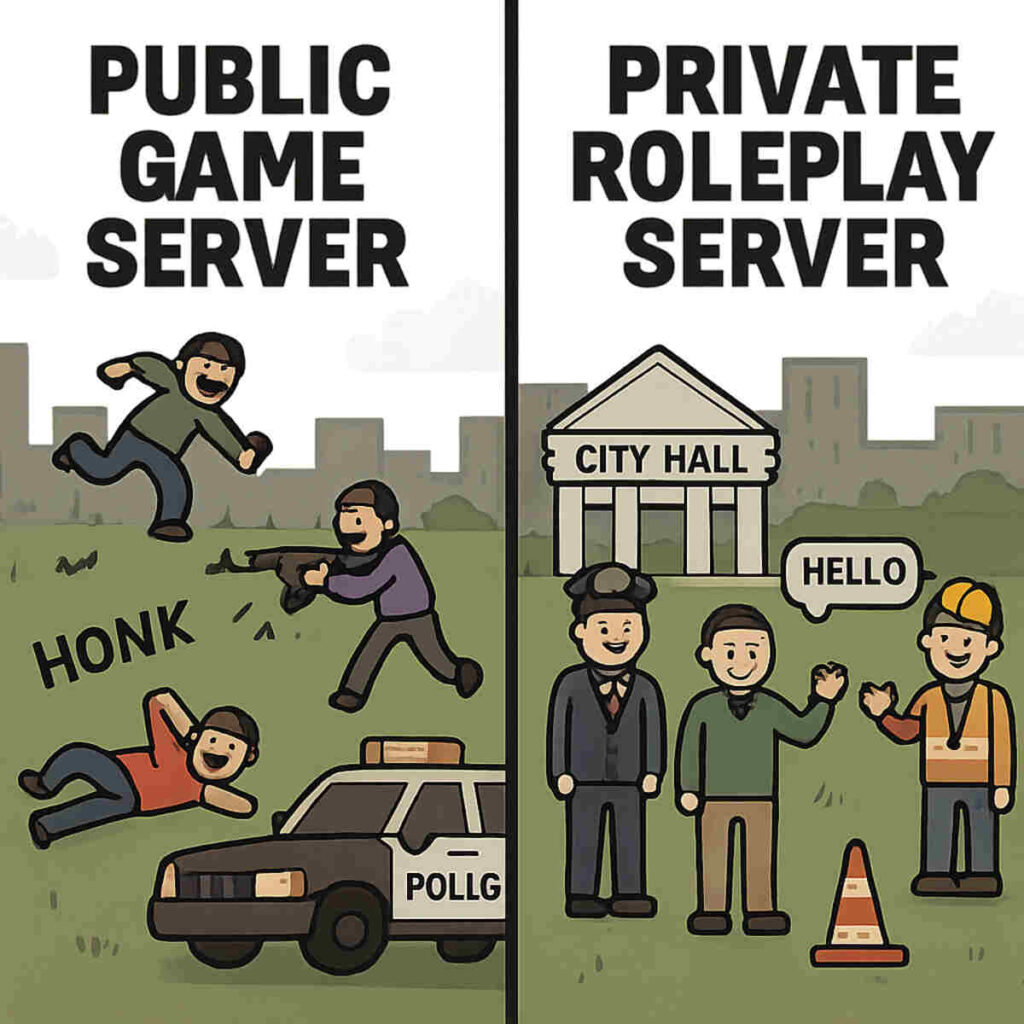
When browsing server lists, you will generally encounter two types of communities: public servers and private (whitelisted) servers. Understanding public versus private server etiquette is your first major hurdle.
Public Servers: Public servers are open to anyone. They are fantastic for absolute beginners who want to test their microphone setup, learn the basic keybinds, and get a feel for the game without the pressure of strict rules. However, public server etiquette tends to be chaotic. You will likely encounter players who break character, randomly attack others, or treat the game like a standard shooter.
- The Etiquette: Even in public servers, strive to stay in character. Be patient, ignore the trolls, and try to find other genuine roleplayers amidst the chaos. Treat public servers as a sandbox for practicing your character’s voice and mannerisms.
Private (Whitelisted) Servers: Private servers are gated communities. To gain access, you must prove that you understand roleplay mechanics and are committed to the server’s rules. The etiquette here is incredibly strict. Staying in character is mandatory, and treating the virtual world as a real living, breathing place is expected.
- The Etiquette: Respect the server lore. Treat other players with respect outside of character (OOC), and always prioritize the story over your personal gain.
Joining Whitelisted Roleplay Servers
If you want a serious, long-term narrative experience, joining whitelisted roleplay servers is the ultimate goal. These servers offer the highest-quality roleplay because every player has been vetted. But how do you get past the velvet rope?
- Research the Community Lore: Every server has a backstory. Whether it is a gritty 1980s mafia setting or a modern-day realistic city, read the available documentation.
- Join the Community Platform: Most servers use Discord or a dedicated forum. Join it, introduce yourself, and observe the culture.
- Prepare for the Long Haul: Whitelist processes can take anywhere from a few days to several months, depending on the server’s popularity. Patience is heavily rewarded.
How to Pass a Community Application
The gateway to a whitelisted server is the application. Many new players struggle here, but passing a community application comes down to demonstrating effort, understanding the rules, and showcasing creativity.
- Read the Rules Thoroughly: Application questions are designed to test your knowledge of the server’s specific rules. Do not skim the rulebook; read it multiple times.
- Provide Detailed Scenarios: When an application asks, “What would you do if someone points a gun at you while you are unarmed?” a poor answer is “I would put my hands up.” A winning answer is, “I would immediately comply, prioritize my character’s life, roleplay visible fear, and follow the mugger’s instructions to ensure my character survives the encounter.”
- Proofread Your Application: Treat this like a job interview. Use proper spelling, grammar, and formatting. A sloppy application signals that you will be a sloppy roleplayer.
- Nail the Interview: Many servers require a vocal interview after the written application. Be polite, ensure your microphone sounds clear, and be ready to answer hypothetical roleplay scenarios on the spot.
Technical Setup: Tools for Ultimate Immersion
Roleplaying requires more than just a base game. It requires specialized tools designed to enhance the environment and provide mechanics that facilitate storytelling.
Why Use Dedicated Roleplay Launchers
If you are wondering why use dedicated roleplay launchers, the answer lies in stability, customization, and server management. Launchers like FiveM (for GTA V) or RedM (for Red Dead Redemption 2) bypass the game’s official multiplayer servers to connect you directly to private, community-hosted servers.
- Custom Assets: Dedicated launchers allow servers to implement custom vehicles, custom clothing (EUP), unique map locations, and fully customized user interfaces that the base game does not support.
- Anti-Cheat Measures: Launchers provide robust anti-cheat systems that are vital for maintaining the integrity of a roleplay server.
- Separation of Game Files: By using a launcher, you keep your base game files clean, meaning you can easily switch between single-player, official multiplayer, and roleplay servers without corrupting your game.
Immersion Through Specialized Mod Menus
Once in-game, you will often have access to a variety of tools. Achieving true immersion through specialized mod menus separates decent roleplayers from exceptional ones. These menus (often accessed via a radial wheel or specific hotkeys) are your best friends for non-verbal communication.
- Emote Menus: Instead of just standing still while talking, use emotes. Lean against a wall, cross your arms, smoke a cigarette, or hold a cup of coffee. Physical actions add massive depth to your words.
- Walking Styles: Your character’s walk should match their persona. A confident CEO walks differently than a tired, overworked construction worker. Use the mod menu to set a permanent walking style that fits your character.
- Scene Creation: Some servers offer scene-creation menus, allowing you to place physical 3D text in the world (e.g., placing text on a broken window that says “Window is shattered, glass on the floor”). This creates environmental immersion for players who arrive at the scene later.
Crafting Your Alter Ego: Character Creation
The beating heart of any MRPC game is your character. You are not playing “yourself in a video game. You are an actor taking on a role. The depth of your character directly correlates to the quality of roleplay you will experience.
How to Write a Character Biography
Before you even log in, you need to know exactly who you are playing. Knowing how to write a character biography is a skill that will make your in-game interactions infinitely more natural. A great biography acts as an anchor; whenever you are unsure how to react in-game, you refer back to your bio.
A winning character biography should include:
- The Basics: Name, age, place of birth, and physical description.
- The Origin Story: Where did they come from? Why did they move to this specific virtual city? (Avoid cliches like “My family was killed and I am seeking revenge” or “I have amnesia.” Opt for realistic, grounded reasons like seeking better job opportunities, escaping a bad breakup, or wanting a fresh start.
- Motivations and Goals: What does your character want out of life? Do they want to own a mechanic shop? Do they want to rise through the ranks of the police force? Having clear goals gives you something to actively pursue every time you log in.
- Strengths and Flaws: Superman is boring without Kryptonite. Give your character flaws. Maybe they are easily manipulated, fiercely loyal to a fault, have a gambling addiction, or are terrified of the dark. Flaws create conflict, and conflict creates a story.
Developing Realistic Player Personas
There is a temptation in video games to be the ultimate badass—the person who wins every fight, outsmarts every cop, and makes millions. However, the secret to longevity in MRPC games is developing realistic player personas.
- The Average Joe: Often, the most beloved characters in a server are normal people. A quirky taxi driver, an overworked paramedic, or a paranoid conspiracy theorist running a hotdog stand. These characters generate organic interactions because they are relatable.
- Character Progression: Do not start your character as a hardened criminal mastermind. Start as a petty thief or a street-level hustler and organically roleplay the rise to power over months of gameplay. This makes your character’s eventual success feel earned and respected by the community.
- Consistency: If your character is deathly afraid of dogs, they cannot suddenly start petting a K-9 unit just because you, the player, think the dog is cute. Stay true to the persona you have developed, even when it puts you at a disadvantage.
The Golden Rules of Roleplay
Every virtual city has its own set of rules, but there is a universal code of conduct that governs almost all serious MRPC environments. Breaking these rules is the fastest way to get banned. Understanding them deeply will make you a trusted member of the community.
What Are the Rules of Serious RP?
If you are wondering what are the rules of serious rp, they generally revolve around maintaining the illusion of reality. Here are the foundational pillars:
- Stay in Character (IC) at All Times: Unless an admin instructs you to speak Out of Character (OOC), you must never break character. If you encounter a glitch, roleplay it. If your car flies into the air due to a bug, treat it as a bizarre, terrifying anomaly or “a localized hurricane.”
- Value of Life (NVL/Fear RP): Your character only has one life. You must roleplay a realistic fear of death. If three people point guns at you, you do not draw your own gun and try to shoot them all like an action hero. You surrender. Your life is the most valuable thing you possess.
- Metagaming: the act of using OOC information to your IC advantage. If you are watching a Twitch stream of another player and see that they are hiding at the docks, you cannot use that information to find them in-game unless your character organically discovers it.
- Random Deathmatch (RDM) & Vehicle Deathmatch (VDM): You cannot attack, shoot, or run over another player without a valid, extensively roleplayed reason. Violence should always be the climax of a story, not the starting point.
Understanding FailRP and Powergaming
Two of the most critical concepts to grasp are FailRP and Powergaming. Countless players are removed from servers simply because they do not fully grasp these ideas. Understanding failrp and powergaming is non-negotiable.
FailRP (Fail Roleplay): FailRP is a broad term for any action that breaks the boundaries of realism or the server’s lore.
- Example of FailRP: You flip your car five times at 120 mph, land on your roof, immediately jump out, and start sprinting away from the police.
- How to Avoid It: Roleplay your injuries. After a major crash, roleplay being dazed, injured, or trapped. Use the /me command to type [/me clutches their bleeding head and groans in pain].
Powergaming: Powergaming is forcing an action or outcome on another player without giving them a chance to react, or performing actions that are physically impossible to gain an unfair advantage.
- Example of Powergaming (Bad): Typing [/me knocks the guard out instantly with one punch and takes his keys]. This forces the outcome on the other player.
- Example of Proper RP (Good): Typing [/me attempts to swing a heavy punch at the guard’s jaw]. This allows the other player to respond with [/me tries to dodge the punch] or [/me takes the hit and stumbles backwards]. Always leave room for the other player to dictate how their character reacts.
- Another form of powergaming is hiding a massive assault rifle in your swim trunks. If you don’t have a bag, you realistically cannot hide large items.
Mastering the Art of Interaction and Acting
MRPC games are essentially massive, unscripted theatrical plays. You are an improvisational actor, and the server is your stage. Enhancing your acting skills will drastically improve the quality of your roleplay.
Advanced Improvisational Acting Techniques
To be highly sought after for scenes and storylines, you should borrow heavily from theater. Utilizing advanced improvisational acting techniques will make your interactions fluid and captivating.
- The “Yes, And…” Principle: This is the golden rule of improv. When another player introduces a concept, accept it (“Yes”) and add to it (“And”). If a player runs up to you and says, “Did you see that UFO over the bank?” do not say, “You’re crazy, there is no UFO.” (This shuts down the RP). Instead say, “Yes! And I swear I saw a green light beam down into the vault!” (This escalates the RP and creates a fun scenario).
- Active Listening: Don’t just wait for your turn to speak. Listen carefully to what the other character is saying. Pick up on their tone, word choice, and emotional state, and let your character react genuinely to them.
- Yielding: You do not always have to be the loudest or most important person in the room. Yielding means allowing other players to take the spotlight. If someone is having a dramatic emotional breakdown, give them the space to act. Support their scene rather than trying to steal the attention.
- Embracing Failure: In gaming, we are conditioned to want to win every encounter. In roleplay, losing is often more fun. Getting scammed, losing a fistfight, or getting caught in a lie provides incredible avenues for character development. Lean into your failures.
Benefits of Voice-Based Roleplaying
While text-based RP has its charm, the modern MRPC landscape is heavily reliant on VoIP (Voice over Internet Protocol). The benefits of voice-based roleplaying cannot be overstated.
- Emotional Resonance: Voice allows you to convey subtle emotions—fear, sarcasm, heartbreak, or joy—that are incredibly difficult to communicate through text. A trembling voice during a hostage situation is incredibly immersive.
- Pacing and Fluidity: Voice allows for rapid, realistic back-and-forth banter. Arguments, jokes, and casual conversations flow naturally, mirroring real life.
- Voice Modulation and Accents: You do not need to be a professional voice actor, but slightly altering your pitch, adding a rasp, or trying a subtle accent can completely separate you (the player) from your character. It signals to others that you are fully in character.
Scripted Versus Organic Player Interactions
As you spend more time in a city, you will experience different types of storylines. Understanding the balance between scripted versus organic player interactions is key to managing your expectations and creating content.
Scripted Interactions: These are planned events. Examples include a mayoral election debate, an underground fight club tournament, or a planned wedding. Players agree on the premise OOC and log in to execute the event.
- Pros: High turnout, guaranteed action, and excellent for major story arcs.
- Cons: Can sometimes feel rigid if players refuse to let the event deviate from the “script.”
Organic Interactions: These are completely spontaneous. You bump into someone at the gas station, strike up a conversation, and three hours later, you are helping them search for their missing dog in the mountains.
- Pros: Feels incredibly natural and exciting. Often leads to the most memorable and unexpected friendships or rivalries.
- Cons: Can sometimes be slow. You might drive around for an hour without finding a meaningful interaction.
Winning Tip: The best players initiate organic RP that eventually blossoms into massive scripted events. Treat every random encounter as the potential start of an epic saga.
Thriving in the World: Jobs, Money, and Society
A virtual city needs a functioning society to feel real. Beyond the cops-and-robbers dynamic, the daily grind of city life provides a massive canvas for roleplay.
Virtual Economy and Job Systems
Almost every server features a virtual economy and job systems. You will likely need to earn in-game money to buy food, clothing, vehicles, and housing. However, there is a right way and a wrong way to approach this.
The Wrong Way (Grinding): Many new players fall into the MMO trap. They get a job as a garbage collector and spend 8 hours silently driving back and forth, grinding money to buy a sports car. This provides zero roleplay value to the server and leads to rapid burnout.
The Right Way (Roleplaying the Job): Use your job as an engine for roleplay.
- If you are a mechanic, do not just click a button to repair a car. Ask the customer what happened. Use your mod menu to grab a wrench, open the hood, use /me commands to inspect the engine, and haggle over the price of “imported parts.”
- If you are a delivery driver, listen to the in-game radio, stop at red lights, complain to store owners about traffic, and strike up conversations with the people you deliver to.
- Remember: The money is secondary. The interactions you have while earning the money are the primary goal.
Emergency Response Simulation Mechanics
A massive pillar of any MRPC game is the emergency services—Police, EMS (Emergency Medical Services), and Fire Departments. Playing these roles requires a deep understanding of emergency-response simulation mechanics, as you are effectively the server’s moderation team and its lifeline combined.
Law Enforcement (LEO): Playing a police officer is highly demanding. You must know the server’s penal code, understand pursuit protocols (Standard Operating Procedures, or SOPs), and balance catching criminals with ensuring everyone has fun.
- Winning Tip for LEOs: Don’t play to “win” the arrest. Give criminals a chance. If they roleplay a clever escape, let them have it. Focus on investigations, interrogations, and community policing (talking to civilians, getting coffee) rather than just waiting for bank robberies.
Emergency Medical Services (EMS): EMS roleplayers are often the unsung heroes of a server. They deal with the aftermath of every major event. Good EMS RP involves detailed medical triage.
- Winning Tip for EMS: Do not just revive a player and walk away. Use /me to check their pulse, ask them where it hurts, roleplay applying bandages, loading them onto a stretcher, and transporting them to the hospital for “surgery.” Good EMS players force injured players to roleplay their recovery, vastly increasing immersion.
Managing Conflict and Maintaining the Community
Put hundreds of creative, passionate people in a virtual city, and conflict is inevitable. However, there is a massive difference between in-character (IC) conflict and out-of-character (OOC) toxicity. Navigating this boundary gracefully is the true hallmark of an MRPC veteran.
Resolving In-Game Character Disputes
When your character is betrayed, robbed, or hurt, it is natural to feel a spike of adrenaline. But you must remember that your character’s feelings are not your feelings. Resolving in-game character disputes requires emotional maturity.
- Keep it IC: If a rival gang steals your territory, do not go to Discord to complain. Handle it in the game. Plan a retaliation, form an alliance, or negotiate a truce. Let the story play out.
- Avoid “Going OOC” in the Game: If you believe someone just broke a rule (e.g., they used powergaming to steal your car), do not break character to yell at them over voice chat. This ruins the immersion for everyone else nearby. Roleplay the scenario to the best of your ability, let the scene finish, and then handle the rulebreak later.
- Using the Player Report System: If a rule was genuinely broken, use the server’s ticket or report system. Provide video evidence (clipping software is a must-have for roleplayers) and calmly explain the situation to the admins. Let the staff handle the discipline.
- The “24-Hour Rule”: If an interaction makes you genuinely angry in real life, step away from the keyboard. Take a 24-hour break before filing a report or sending a message. Usually, you will realize it was just a game, and the anger will fade.
Building a Positive Reputation
Your OOC reputation in a community is your most valuable currency. Admins and community managers talk. If you are known as someone who takes losses well, creates fun scenarios for others, and respects the rules, you will find doors opening for you. You will be invited to secret factions, offered whitelisted business ownerships, and trusted with complex storylines.
Conversely, if you are known as a “play-to-win” grinder who argues in Discord and complains about every minor inconvenience, you will quickly find yourself isolated, regardless of how rich your character is.
Conclusion: The Ultimate Takeaway for MRPC Success
Succeeding in mrpc games is a journey of creativity, empathy, and collaboration. It is not about possessing the sharpest aiming skills or grinding the most virtual currency. It is about contributing to a living, breathing world.
By taking the time to write a deep character biography, mastering the art of improvisational acting, understanding the strict rules of engagement, and prioritizing the story above all else, you will not just play the game—you will help create it. Whether you are patching up a gunshot wound as a dedicated paramedic, running a bustling underground syndicate, or simply flipping burgers at the local diner, your actions weave the fabric of the community.
Remember, in the world of roleplay, you “win” by making sure that everyone involved in a scene walks away with a great story to tell. Equip your specialized launchers, step into your realistic persona, and dive into the boundless possibilities of multiplayer roleplay communities. The city is waiting for your story.