

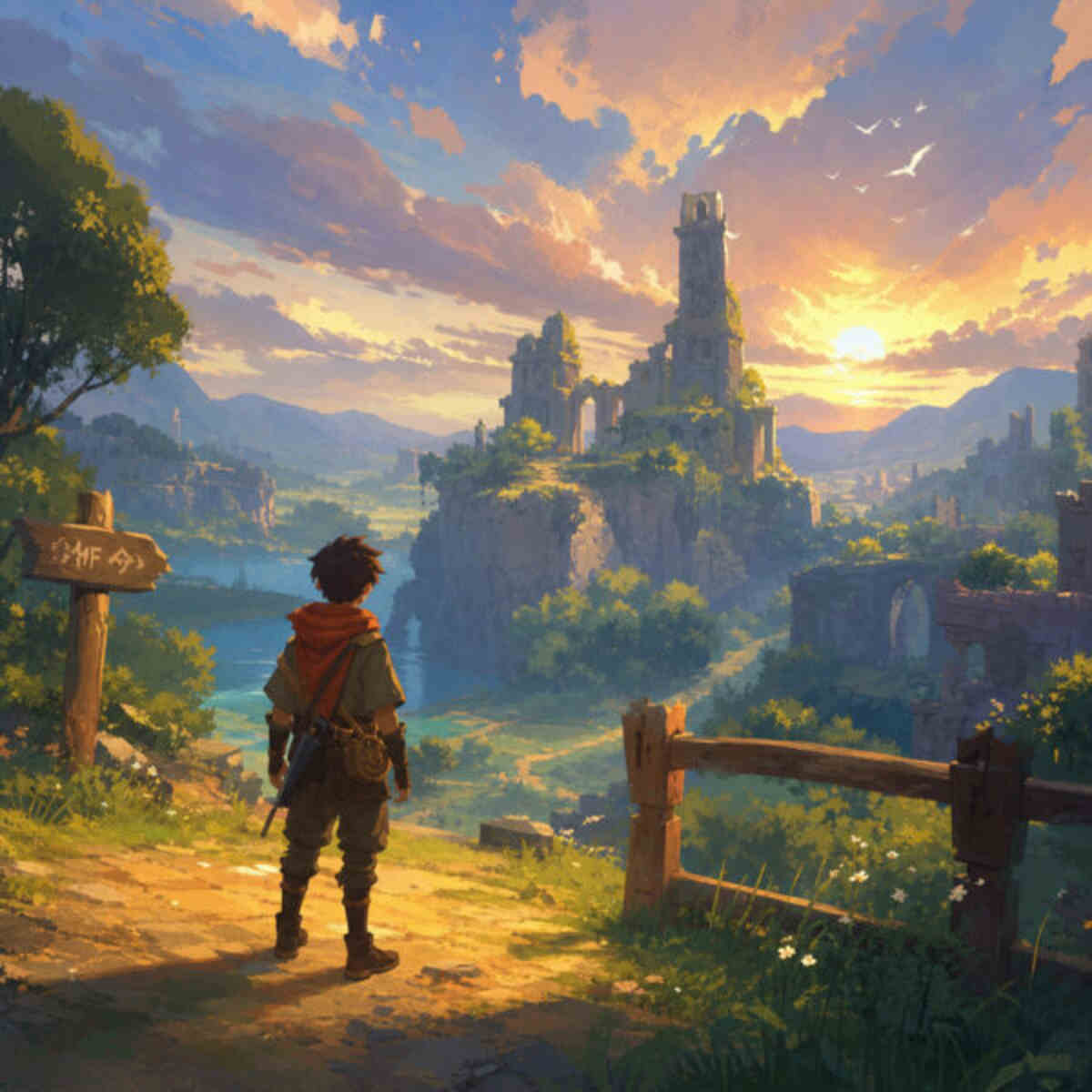
Artistic games change the way players feel, think, explore, and remember interactive worlds. Instead of treating art direction as decoration, they make visual style, sound, pacing, mechanics, and theme work together as part of the experience itself. For players, that can mean deeper emotional connection, clearer discovery, more personal interpretation, and a stronger sense that every interaction matters. Receive the Best information about slot online.
What makes a game “artistic” for the player?
A game feels artistic when its creative choices actively shape how the player understands and inhabits the experience. The art is not simply a surface layer placed on top of familiar systems; it guides attention, sets emotional expectations, communicates rules, and gives meaning to the player’s actions. In the strongest artistic games, the player does not just look at the artwork. They move through it, test it, interpret it, and participate in it.
This is why artistic games can be difficult to define by genre alone. A platformer, puzzle game, adventure game, role-playing game, or walking simulator can all be artistic if the experience is built around expressive design. What matters is the relationship between form and feeling. The player should sense that the visual language, audio design, interaction model, and narrative tone are all pulling in the same direction.
Consider Journey. Its desert landscapes, wordless communication, soft movement, and restrained interface create a feeling of vulnerability and wonder. The player experience is shaped as much by what the game withholds as by what it provides. There is no dense exposition telling the player what to feel. Instead, scale, music, distance, and companionship create emotional meaning through play.
The same principle appears in very different forms in games like GRIS, Okami, Monument Valley, Cuphead, Hollow Knight, Kentucky Route Zero, The Return of the Obra Dinn, and Gorogoa. Each uses a distinct artistic approach, but the goal is similar: to make the player experience more memorable by aligning style with interaction.
Art direction becomes a form of play
In many conventional games, art direction supports play by making characters, environments, and objectives readable. In artistic games, art direction often becomes play. Color, composition, texture, animation, and spatial rhythm are not only aesthetic choices. They become part of how players understand what to do, where to go, and why their actions matter.
Monument Valley is a clear example. Its impossible architecture is not just a visual theme inspired by optical illusion. It is the puzzle system. The player learns that perspective is not fixed, that impossible paths can become possible, and that the world’s beauty is inseparable from its logic. The result is an experience that feels gentle, surprising, and elegant because the game’s visual identity is also its core interaction.
The Return of the Obra Dinn works differently. Its stark monochrome style evokes old computer graphics, but it also focuses the player’s attention on shape, position, gesture, and evidence. Because there is no lush color palette to distract the eye, the player studies faces, uniforms, objects, and scenes with investigative care. The art style shapes the player into a careful observer.
In Cuphead, the hand-drawn animation style does more than reference classic cartoons. It affects timing, character readability, and the emotional energy of each encounter. Bosses feel theatrical because their movement is exaggerated and full of personality. The player is not only reacting to attack patterns; they are reading animated performance.
This is one of the defining strengths of artistic games: they turn aesthetic decisions into functional design. The image is not separate from the system. It teaches, challenges, rewards, and surprises.
The core design principles behind artistic player experiences
Artistic games may look wildly different from one another, but many rely on shared design principles. These principles help explain why certain games feel cohesive, emotionally powerful, or unusually memorable.
Visual hierarchy guides attention without overexplaining
Players need to know what matters. Artistic design can guide them through contrast, motion, lighting, shape, framing, and color rather than constant markers or intrusive instructions. When this is done well, the player feels intelligent and immersed because the world itself communicates.
For example, Hollow Knight uses silhouettes, environmental contrast, and subtle lighting to make its underground spaces readable while preserving mystery. The player often feels lost in a meaningful way, not because the design is careless, but because exploration, uncertainty, and gradual familiarity are central to the experience.
Mechanics and metaphor work together
A mechanic becomes more powerful when it expresses the game’s theme. In GRIS, movement abilities and changing colors connect to emotional recovery. The player’s expanding capabilities feel like an inner transformation, not just a sequence of upgrades. This relationship between action and meaning is one reason artistic games can produce strong emotional responses without heavy dialogue.
Restraint makes space for interpretation
Artistic games often trust players to make connections. They may avoid excessive explanation, leave narrative gaps, or use symbolic imagery. This restraint can make the experience more personal because the player is invited to interpret rather than simply receive.
Inside uses this approach through atmosphere, body language, environmental threat, and silence. The player does not need every detail explained to feel tension and unease. In fact, uncertainty is part of the experience.
Cohesion matters more than visual complexity
An artistic game does not need the most detailed graphics or the largest budget. It needs a clear creative vision. A simple visual style can be more effective than a complex one if every element supports the intended mood and interaction.
This is why smaller design games and craft games can be so compelling. A limited palette, handmade texture, paper-like interface, or deliberately minimal soundscape can produce a stronger impression than a technically elaborate but unfocused presentation.
Pacing turns interaction into rhythm
Artistic player experience is often shaped by rhythm: moments of challenge, stillness, discovery, tension, release, and reflection. Designers use pacing to tell the player when to act quickly, when to look closely, and when to breathe.
Journey is especially effective here. Its sweeping descents, quiet ruins, harsh climbs, and moments of companionship create a rhythm that feels almost musical. The player experience becomes emotional because the game carefully controls intensity over time.
Emotional design gives players more than objectives
Players remember games for many reasons: mastery, competition, story, challenge, exploration, identity, humor, fear, and surprise. Artistic games often stand out because they make emotion a design goal rather than a side effect. They ask not only, “What will the player do?” but also, “What will this action feel like?”
That difference changes everything. A jump can feel playful, fragile, heavy, desperate, graceful, or lonely depending on animation, sound, timing, camera distance, and context. A door opening can feel routine or sacred. A long walk can feel boring or meditative. The artistry lies in how these details are arranged around the player’s body and attention.
Shadow of the Colossus demonstrates how emotional design can complicate achievement. Defeating a colossus is mechanically satisfying, but the music, scale, creature animation, and quiet aftermath make victory feel uneasy. The player experience is not a simple power fantasy. It is awe mixed with doubt.
Florence uses small, intimate interactions to express relationship dynamics. Simple puzzle-like gestures represent conversation, closeness, routine, conflict, and change. The experience is brief and accessible, but its emotional clarity comes from matching interaction to ordinary human feeling.
This is where artistic games most strongly redefine experience. They expand the purpose of play beyond winning, optimizing, or completing. They make room for reflection, tenderness, discomfort, melancholy, beauty, and ambiguity.
How do artistic games shape player attention?
Artistic games shape attention by deciding what the player notices, how slowly they notice it, and what emotional weight that noticing carries. Through composition, sound cues, movement, negative space, and interface restraint, they can make players look more carefully, listen more closely, and interpret details that a more cluttered design might bury.
Attention is one of the most valuable resources in game design. A player cannot feel the atmosphere of a ruined city, understand a character’s posture, or appreciate the importance of an object if the screen constantly competes for focus. Artistic games often reduce noise so meaning can surface.
This does not mean they are always slow or minimal. Cuphead is visually energetic and mechanically intense, yet it still directs attention through animation clarity and readable attack patterns. Ori and the Blind Forest and its sequel use rich color and motion, but important interactive elements are designed to stand out through glow, contrast, and animation.
A practical way to understand attention design is to look at what the game asks the player to do with their eyes and ears:
- Scan the environment: Exploration-focused artistic games often reward players for reading backgrounds, silhouettes, and paths.
- Notice emotional cues: character posture, musical shifts, lighting, and animation can convey mood before dialogue appears.
- Interpret symbols: Abstract imagery can invite players to connect visual motifs with themes such as grief, memory, growth, or control.
- Anticipate movement: Action-heavy artistic games still need clarity, especially when visual style is bold or unusual.
- Recognize contrast: A sudden change in color, texture, or sound can signal danger, progress, transformation, or revelation.
When attention is well shaped, players feel guided without being pushed. They experience discovery as their own, even when the design has carefully prepared it.
Craft games and the appeal of handmade interaction
Craft games create a strong player experience by emphasizing the feeling of something made with care. The term can refer to games with handmade visual aesthetics, tactile systems, building and making mechanics, or, more broadly, intimate authorship. Their appeal often comes from texture, imperfection, small detail, and the pleasure of interacting with objects that feel thoughtfully constructed.
A craft game might look like paper, clay, fabric, ink, wood, collage, or miniature diorama. It might also center on crafting as a mechanic, asking players to gather, combine, repair, decorate, or build. In both cases, the player experience is shaped by tactility. The player feels connected to the world because it appears touchable, assembled, and responsive.
LittleBigPlanet is a useful example of craft aesthetics influencing experience. Its stitched, cardboard, and fabric-like world encourages playfulness and creativity. The handmade look supports the idea that levels are not distant digital spaces but things that can be built, shared, and reimagined.
Yoshi’s Woolly World and similar textile-inspired games use soft materials to create warmth and charm. The visual style makes the world feel safe, playful, and approachable. Even when the game contains challenge, the material language changes the emotional texture of that challenge.
Craft games also influence pacing. Because handmade or tactile worlds invite inspection, players may slow down. They may notice seams, edges, props, textures, and small environmental jokes. This creates a different kind of engagement from speed-focused play. The reward is not only completion but appreciation.
For designers, the lesson is practical: material style can change player behavior. A sharp, metallic interface invites different expectations than a paper map does. A soft felt landscape communicates differently from a neon grid. Players bring real-world associations to visual materials, and artistic games use those associations to shape mood and interaction.
Design games turn systems into self-expression
Design games can mean games about designing, decorating, building, arranging, or solving through composition. They may also be games whose strongest appeal lies in elegant design systems. In both senses, design games give players a chance to experience creativity as action.
The player is not only consuming a finished artwork. They are making choices that alter form, layout, style, or meaning. This can be as open-ended as building a home, arranging a town, or designing a character. It can also be as focused as rotating puzzle panels, composing a path, or arranging objects to produce a specific result.
Gorogoa is a strong example of design as interaction. Players move illustrated panels, layer images, and discover connections between scenes. The experience feels artistic because solving the puzzle is also an act of visual composition. The player’s mind is engaged not only by logic but by spatial poetry.
Chicory: A Colorful Tale uses coloring as both mechanic and expression. Painting the world changes how players relate to spaces and characters. The simple act of adding color becomes a way to participate in the world’s emotional recovery.
Design games can also support identity. When players customize spaces, outfits, gardens, cards, tools, or homes, they invest part of themselves in the result. The experience becomes personal because the game world reflects the player’s preferences. This does not require unlimited freedom. Even within constraints, meaningful design choices can create ownership.
Good design games usually balance freedom with friction. Too much restriction makes creativity feel cosmetic. Too little structure can make choices feel aimless. The best experiences give players enough rules to create purpose and enough flexibility to feel expressive.
Artistic games deepen immersion through coherence
Immersion is often misunderstood as realism. Artistic games show that coherence is usually more important. A game can be stylized, abstract, surreal, or minimal and still feel deeply immersive if its elements follow a consistent internal logic.
Okami creates immersion through a world that feels like a moving ink painting. Its brush mechanic is not a standalone gimmick; it connects visual style, mythology, puzzle-solving, and player agency. The player does not just see a painted world. They paint into it.
Kentucky Route Zero creates a very different kind of immersion through theatrical framing, sparse dialogue, magical realism, and quiet melancholy. Its world does not aim to feel realistic in a conventional sense. Instead, it feels coherent in tone. The player accepts its strangeness because the writing, staging, music, and pacing all support the same dreamlike mood.
This kind of coherence affects player trust. When every design element appears intentional, players become more willing to follow unusual rules, accept ambiguity, and engage with symbolic storytelling. If the style and systems clash without purpose, players may feel confused or emotionally distant.
Coherence also helps artistic games avoid the trap of novelty for novelty’s sake. A strange visual style can attract attention, but it only sustains experience when it supports interaction. The player should eventually understand why the game looks, sounds, and moves the way it does.
The role of sound, silence, and music
Visual art often receives the most attention in discussions of artistic games, but sound is just as important to player experience. Music, ambience, silence, interface sounds, footsteps, impact effects, and voice texture all influence how players interpret the world.
Sound can make a space feel alive before the player sees anything important. A distant echo can suggest scale. A soft musical cue can signal safety. A harsh mechanical sound can create anxiety. Silence can make the player aware of their own movement and expectation.
In Journey, music rises and falls with movement, discovery, and companionship, helping the experience feel emotional without relying on spoken language. In Hollow Knight, different regions have distinct sound identities, making exploration feel like entering new emotional climates. In Inside, sound design supports tension through restraint, weight, and environmental unease.
For player experience, sound performs several practical functions:
- It confirms action. A clear sound can make a button press, jump, hit, or selection feel responsive.
- It sets emotional temperature. Music and ambience tell players whether a space feels safe, mysterious, playful, sad, or threatening.
- It supports navigation. Directional audio, recurring motifs, or environmental cues can guide players without visual clutter.
- It creates memory. A strong theme or distinctive sound can attach emotion to a place, character, or moment.
- It controls intensity. Removing sound can be as powerful as adding it, especially before a reveal or after a dramatic action.
Artistic games often treat sound as part of the artwork’s structure. The player’s memory of the game may be inseparable from a musical phrase, ambient space, or sudden silence.
Interface design can protect the artwork
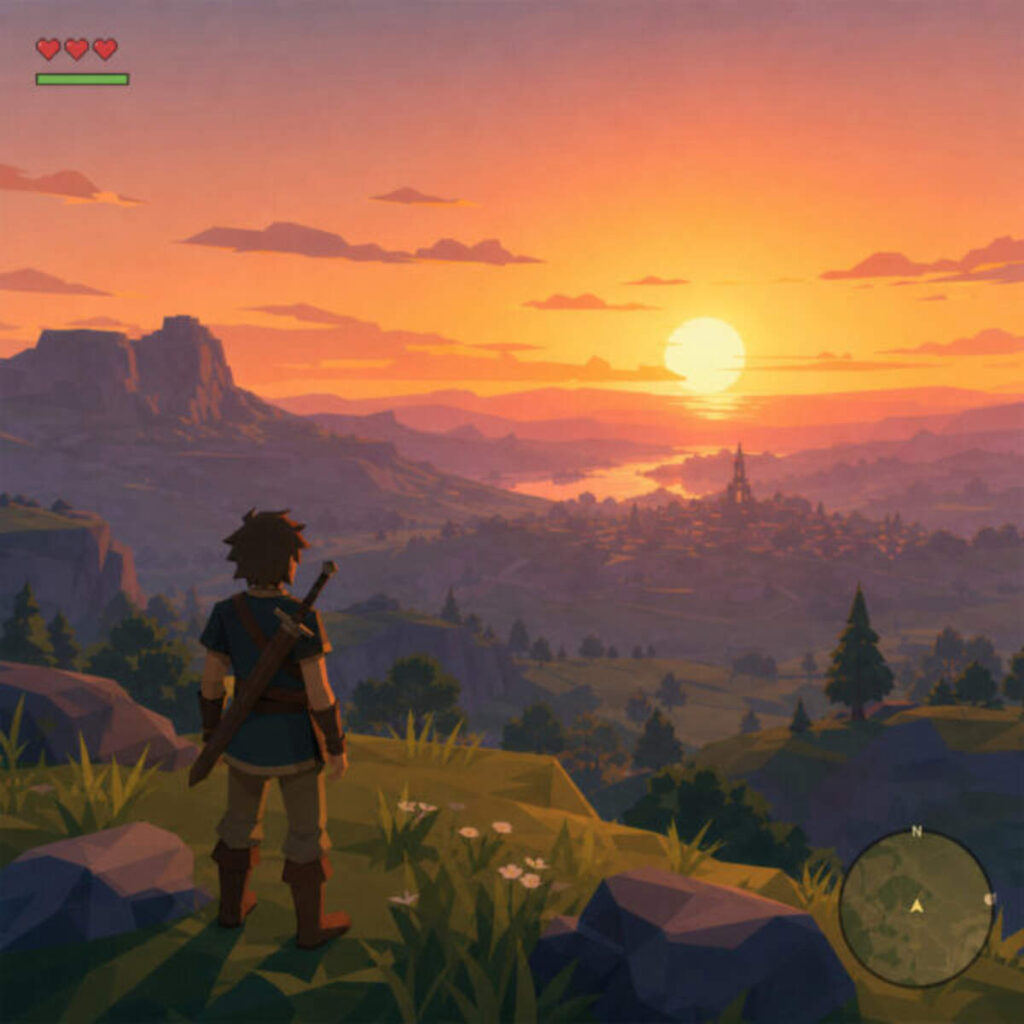
The user interface is one of the most important, and sometimes most overlooked, parts of artistic game design. A beautiful world can lose impact if the screen is crowded with icons, meters, prompts, menus, and notifications that fight the intended mood. Many artistic games use restrained interface design to protect the player’s connection to the world.
This does not mean the best interface is always invisible. Players still need clarity. They need to understand goals, options, consequences, and feedback. The challenge is to provide that information in a way that fits the artistic language of the game.
Some games embed information directly into the world. Health, direction, progress, or danger may be communicated through character animation, environmental change, color shifts, or sound. Others use minimal UI that appears only when needed. The result can be a stronger sense of presence because the player spends less time reading overlays and more time reading the world.
A practical interface checklist for artistic games includes:
- Does the UI match the tone? A playful craft game may support textured, handmade menus, while a stark mystery may need something sharper and quieter.
- Does the UI appear at the right time? Constant information can flatten atmosphere. Contextual information can feel more elegant.
- Can players understand feedback quickly? Artistic restraint should not create avoidable confusion.
- Does the UI respect composition? Important artwork, character animation, and environmental cues should not be unnecessarily blocked.
- Are accessibility needs considered? Small text, low contrast, unclear icons, or purely color-based cues can weaken experience for many players.
Interface design is not separate from artistic direction. It is one of the main ways artistic direction survives contact with actual play.
How can designers balance beauty and usability?
Designers can balance beauty and usability by treating clarity as part of the artwork rather than an enemy of it. A visually stunning game still needs readable goals, responsive controls, understandable feedback, and fair challenges. When players cannot parse what is happening, beauty quickly turns into friction.
The best artistic games understand that usability need not look generic. A path can be marked through light rather than an arrow. A threat can be communicated through animation rather than a warning label. A puzzle rule can be taught through environmental repetition rather than a long tutorial.
The key is to make the player’s learning process feel natural. If the game introduces a visual symbol, it should use that symbol consistently. If a color signals danger in one context, it should not casually signal reward elsewhere unless the confusion is intentional and carefully managed. If an animation indicates vulnerability, timing should support the player’s response.
Practical methods include:
- Prototype readability early. Test whether players understand movement, goals, hazards, and interactive objects before final art becomes expensive to revise.
- Use contrast with purpose. Contrast should highlight what matters, not simply make the screen more dramatic.
- Build a visual vocabulary. Repeated shapes, colors, sounds, and motions help players learn the world’s language.
- Protect player agency. Artistic ambiguity can be rewarding, but basic interaction should still feel fair.
- Test with fresh eyes. Designers know their own symbols too well. New players reveal where style is hiding necessary information.
Beauty and usability are not opposites. In strong artistic games, clarity is beautiful because it helps the player enter the experience without breaking the spell.
Narrative becomes spatial, visual, and interactive
Artistic games often tell stories through more than dialogue or cutscenes. They use architecture, props, color, rhythm, mechanics, and player movement to communicate meaning. This changes the player experience because story becomes something discovered through attention and action.
Environmental storytelling is especially powerful in this context. A room can suggest who lived there. A broken bridge can imply history. A repeated symbol can connect places and memories. Players build understanding by noticing relationships rather than simply receiving exposition.
What Remains of Edith Finch offers a strong example of interactive storytelling shaped by visual and mechanical variety. Each family story uses a distinct form of interaction and presentation, making memory feel fragmented, intimate, and personal. The player experience is not just about learning events. It is about inhabiting different ways of remembering.
Outer Wilds also demonstrates how discovery can become narrative structure. Its worlds are not only locations but systems that teach history through movement, observation, and repeated exploration. The player’s understanding grows because they personally connect clues across space and time.
In artistic games, narrative design often works best when it respects the player’s role as participant. Instead of pausing play to explain everything, the game lets players uncover meaning through the same actions that define the experience: walking, looking, arranging, painting, listening, building, solving, or surviving.
Artistic games invite personal interpretation
One reason artistic games stay with players is that they often leave room for personal meaning. Not every image needs a single explanation. Not every ending needs a complete answer. Not every symbol needs to be translated into a fixed message.
This openness can make the player experience more durable. A highly explicit story may be satisfying, but an evocative one can continue unfolding in the player’s mind after the game ends. Players discuss what they saw, compare interpretations, and connect the experience to their own feelings or memories.
However, ambiguity needs discipline. If a game is vague because its ideas are underdeveloped, players may feel cheated. If it is open because its themes are carefully supported by imagery, mechanics, and tone, players are more likely to feel invited.
Strong interpretive design often includes:
- Recurring motifs that give players patterns to notice.
- Emotional consistency so ambiguity still feels grounded.
- Concrete interactions that keep symbolism connected to play.
- Selective explanation that clarifies enough without closing every possibility.
- Meaningful endings that resonate even if they remain open.
This is where artistic games can feel closest to literature, cinema, painting, music, or theater while still remaining distinctively interactive. The player’s interpretation is shaped by what they did, not only by what they saw.
Player agency changes the meaning of art
Traditional visual art is usually experienced through observation. Games add agency. The player presses, waits, chooses, fails, repeats, explores, and sometimes refuses. That agency changes how artistic expression works.
If a painting shows a lonely figure in a vast landscape, the viewer may feel a sense of distance or sympathy. If a game places the player in that landscape and asks them to cross it slowly, loneliness becomes embodied. The player feels scale through movement and time. The experience is not only perceived; it is performed.
Agency can also create responsibility. In Papers, Please, the stark presentation, repetitive procedures, and moral pressure create discomfort through the choices it presents. The player is not merely told about bureaucracy and compromise. They participate in a system that forces trade-offs.
In Shadow of the Colossus, the player’s agency complicates beauty. The colossi are majestic, but progress requires destroying them. The game’s emotional force comes from making the player perform the action that creates unease.
This is a major reason artistic games matter. They can explore feelings and ideas through participation. They make players ask not only, “What does this mean?” but also, “What did I do, and how do I feel about doing it?”
Accessibility strengthens artistic impact
Accessibility is sometimes treated as a technical checklist added after creative work is done. For artistic games, that mindset is limiting. Accessibility is part of player experience, and player experience is the heart of artistic design.
If text is too small, contrast is too low, controls cannot be adjusted, or important cues rely only on color or sound, some players may be pushed away from the very experience the game wants to create. A visually expressive game should still make space for different bodies, senses, and play contexts.
Accessibility does not weaken artistic identity when handled thoughtfully. Subtitles can be styled clearly and elegantly. Colorblind-friendly design can improve visual language for everyone. Adjustable difficulty or assist options can protect emotional pacing by allowing more players to stay engaged.
Practical accessibility considerations include:
- Readable text and scalable UI for different screens and viewing distances.
- Strong contrast options that preserve mood while improving clarity.
- Remappable controls so interaction feels physically manageable.
- Multiple cue types so information is not conveyed only through sound, color, or vibration.
- Flexible challenge settings where difficulty is not the sole artistic point.
An artistic game succeeds when players can actually access its artistry. Inclusion is not separate from expression; it expands the audience able to experience it.
The business value of memorable artistic experiences
While artistic games are often discussed in creative terms, they also offer practical value. A distinctive art style can help a game stand out in crowded marketplaces, trailers, screenshots, storefronts, and social feeds. More importantly, a cohesive player experience can drive stronger word-of-mouth because players have something specific to remember and describe.
Players may forget a technically competent but visually generic game. They are more likely to remember a game that made them feel like they were walking through a watercolor grief journey, solving puzzles inside impossible architecture, investigating a monochrome ghost ship, or painting color back into a quiet world.
For studios, this does not mean every game must be strange, minimal, or emotionally heavy. It means creative specificity matters. A clear artistic identity can make design decisions easier, marketing more focused, and player expectations more accurate.
The practical benefits often include:
- Sharper positioning: Players can quickly understand what makes the game different.
- Stronger screenshots and trailers: Visual identity communicates before a player reads a description.
- More coherent production decisions: Teams can evaluate features against the central artistic vision.
- Better emotional recall: Players remember how the game felt, not only what it contained.
- Community discussion: Symbolic, expressive, or unusual design often gives players more to talk about.
The risk is that style can be mistaken for substance. A beautiful game that lacks readable interaction, purposeful pacing, or meaningful systems may attract attention but fail to hold it. Artistic identity must be supported by craft.
Common mistakes that weaken artistic games
Not every visually distinctive game creates a strong artistic experience. Sometimes a game has impressive screenshots but weak play. Sometimes symbolism feels disconnected from mechanics. Sometimes the desire to be mysterious leads to confusion rather than depth.
Common problems include:
- Style without function: The art looks interesting but does not support interaction, emotion, or theme.
- Unreadable scenes: Important objects, hazards, or paths are lost in decorative detail.
- Inconsistent visual language: Colors, shapes, or symbols mean different things without clear intent.
- Overexplaining themes: The game tells players what to feel instead of letting play create meaning.
- Underdeveloped ambiguity: The story is vague, but not meaningfully open.
- UI clashes: Menus and prompts break the mood by following a generic template.
- Poor pacing: Beautiful moments lose their impact when the game lacks rhythm, contrast, or rest.
Avoiding these mistakes requires discipline. Designers should ask how each artistic choice affects the player’s behavior, feeling, and understanding. If an element does not support the intended experience, it may need to change, even if it looks impressive in isolation.
A practical framework for analyzing artistic games
Whether you are a designer, critic, marketer, student, or curious player, it helps to analyze artistic games through the lens of experience. Instead of asking only whether the art is beautiful, ask how the art changes play.
Use this framework when studying an artistic game:
- Identify the intended feeling. Does the game seem to aim for wonder, grief, tension, comfort, curiosity, awe, absurdity, intimacy, or something else?
- Study the visual language. Notice palette, shape, texture, scale, animation, framing, and contrast. Ask how these elements guide attention.
- Connect mechanics to meaning. Look for actions that express theme. Movement, crafting, fighting, painting, arranging, waiting, and choosing can all carry meaning.
- Listen to the soundscape. Consider how music, ambience, silence, and feedback alter the mood of play.
- Evaluate interface choices. Decide whether the UI protects or disrupts immersion.
- Observe pacing. Notice when the game intensifies, slows down, repeats, surprises, or gives the player space.
- Consider interpretation. Ask what the game leaves open and whether that openness feels intentional.
- Assess accessibility and clarity. A powerful artistic idea still needs to be playable and understandable.
This framework is useful because it keeps analysis grounded in player experience. It respects artistic ambition while still asking practical design questions.
What players gain from artistic games
Players gain more than visual novelty from artistic games. They gain new ways to feel agency, interpret worlds, connect with themes, and remember interactive moments. These games can be relaxing, challenging, unsettling, joyful, meditative, or emotionally complex, but their strongest value lies in how deliberately they shape the player’s inner experience.
For some players, artistic games offer a break from familiar power fantasies. They provide space to wander, notice, reflect, or create. For others, they deliver intense craft through precise design, striking presentation, and systems that reveal meaning over time.
They also broaden what games can be. A game can be a poem of movement, a puzzle of perspective, a handmade toy box, a moral pressure chamber, a visual essay, a musical journey, or a place to build and decorate. Artistic games, craft games, and design games all expand the vocabulary of play by showing that interaction can carry beauty, thought, and feeling.
The lasting takeaway
Artistic games redefine the player experience by making every creative choice integral to how the game is played, felt, and remembered. Art direction guides attention, mechanics express meaning, sound shapes emotion, interface design protects immersion, and agency turns interpretation into participation.
The best examples are not memorable simply because they look different. They are memorable because their style, systems, and emotional goals work together. When artistic design is handled with clarity and purpose, players do not just complete a game. They carry an experience with them.