

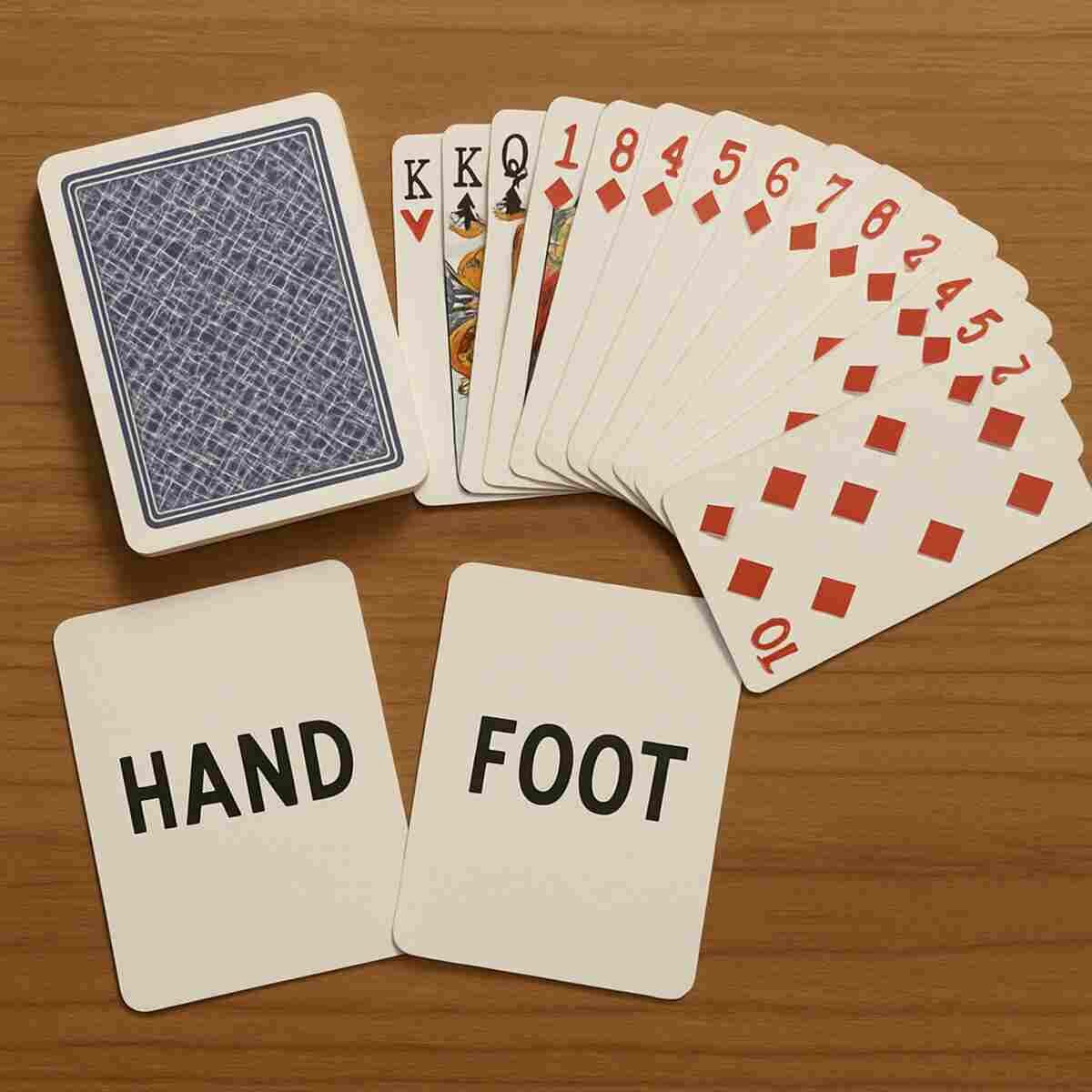
Playing card games is a fantastic way to unwind and spend quality time with friends and family. One game that stands out for its unique blend of strategy and fun is the Hand Foot card game. If you’re new to this game or just want to brush up on the rules, you’ve come to the right place. In this guide, we’ll break down the basics of the Hand Foot card game, provide some handy tips, and even sprinkle in a few strategies to elevate your play. So, grab a deck of cards, and let’s dive in! To find more, check on KOIN555
Before we jump into tips and strategies, it’s essential to get familiar with the basic rules of the Hand Foot card game. The game is typically played with four to six players using multiple decks of standard playing cards, including the jokers.
Setting Up the Game
- Gather Your Decks: To set the stage for a thrilling game, you’ll need about five or six decks of cards. The exact number can vary based on how many people are playing, but more decks usually mean more fun! Additional decks increase the complexity and the potential for exciting melds, providing a richer gameplay experience.
- Deal the Cards: Each player needs two sets of 11 cards. One set is called the “Hand,” and the other is the “Foot.” Players should not look at their Foot cards until they have played all their Hand cards. This adds an element of suspense and surprise to the game, as players must strategically use their Hand cards without knowing what awaits them in the Foot.
- Create the Draw Pile: Place the remaining cards face down in the center as the draw pile. Flip the top card over to start the discard pile. This setup is crucial as it dictates the flow of the game, with the draw and discard piles being central to players’ strategies.
The Objective
- Play All Cards: The primary goal is to play all the cards in your Hand and Foot by forming sets and runs. The challenge lies in effectively managing both sets to clear them before opponents do.
- Score Points: The game is played over several rounds, and the player with the highest score at the end wins. Points are scored not just by going out first, but by creating valuable melds and using wild cards strategically.
- Rounds and Strategy: Each round is an opportunity to refine your strategy. As rounds progress, players can adjust their tactics based on their opponents’ moves and the cards they draw, making adaptability a key skill.
Playing the Game
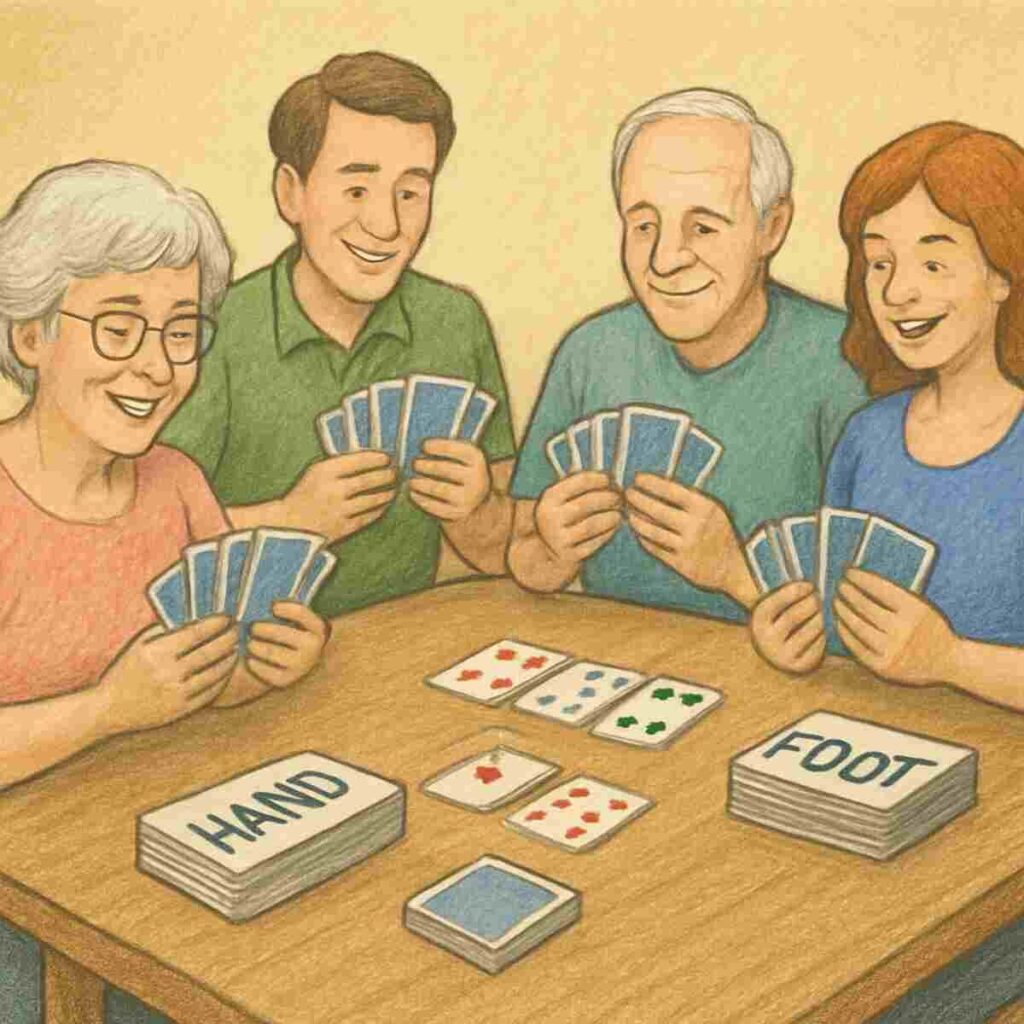
Once everyone has their cards, it’s time to start playing!
Melds and Sets
- Understanding Melds: Melds are sets of at least three cards of the same rank. For example, three 7s or three Queens. Building melds is the backbone of the game, and successful players often plan their melds several turns in advance.
- Using Wild Cards: Jokers and 2s are wild and can be used to complete or extend melds. These cards are powerful tools in your arsenal, allowing you to adapt and overcome tricky situations. Knowing when to use wild cards can turn the tide of a game.
- Natural Melds: Melds made without wild cards are worth more points, so aim to create these when possible. This added point incentive encourages players to balance risk and reward, choosing between immediate gains with wild cards or aiming for higher-scoring natural melds.
Taking Turns
- Draw Cards: At the start of your turn, draw two cards from the draw pile. This simple action can dramatically change your game plan, providing new opportunities or challenges.
- Play Melds: Lay down any melds or add to existing ones on the table. This is where strategic planning pays off, as you decide which cards to meld now and which to hold for future use.
- Discard: End your turn by discarding one card onto the discard pile. Deciding which card to discard is a strategic decision that can either help you set up your next move or hinder an opponent’s progress.
Moving from Hand to Foot
- Transitioning Smoothly: Once you’ve played all the cards in your Hand, you can pick up your Foot and continue playing. This transition is crucial, as it often marks a turning point in the game.
- Excitement of the Foot: The game gets more exciting here, as you’ll have more cards and opportunities to score! The Foot can either solidify your lead or offer a chance for a comeback, depending on the cards you draw.
- Strategic Play: Having a solid strategy for transitioning from Hand to Foot can provide a competitive edge, especially if you plan your moves to maximize scoring potential during this phase.
Tips and Strategies
Now that we’ve covered the basics, let’s move on to some strategies that can give you an edge in the game.
Plan Your Melds
- Stay Flexible: While it’s tempting to aim for natural melds for higher points, flexibility is key. Use wild cards wisely to complete necessary melds. Adapting to changing circumstances can be the difference between victory and defeat.
- Watch Opponents: Keep an Eye on Opponents. Watch what others are discarding. It might give you clues about their strategies and the cards they need. This vigilance allows you to anticipate their moves and adjust your strategy accordingly.
- Anticipate Moves: Developing the ability to anticipate opponents’ next moves can be incredibly advantageous, helping you to stay one step ahead and maintain control of the game.
Manage Your Foot
- Pace Yourself: Don’t rush to your Foot. Make sure you have a solid strategy and enough points from your Hand first. Rushing can lead to missed opportunities and suboptimal plays.
- Balance Your Cards: Try to have a mix of high and low cards in your Foot to give you more options as the game progresses. This balance provides flexibility and adaptability, allowing you to react effectively to different situations.
- Prepare for Surprises: Be ready for surprises when you pick up your Foot. The cards you find may require a quick adjustment of your strategy, so staying adaptable is crucial.
Endgame Tactics
- Go Out Strategically: You need to have at least one red three-card meld before you can “go out” and end the round. Plan your moves so you can achieve this efficiently. This requirement adds a layer of strategy to the endgame, as players must balance going out with optimizing their score.
- Maximize Points: Focus on high-value cards and melds towards the end of the game to boost your score. Prioritizing these cards can make a significant difference in your final score.
- Timing is Everything: Knowing when to make your final move and end the round is critical. Perfect timing can ensure you maximize your points while minimizing your opponents’.
Wrapping It Up
The Hand Foot card game is a delightful mix of strategy, luck, and social interaction. Whether you’re playing casually with friends or in a competitive setting, understanding the rules and employing some strategic thinking can significantly enhance your experience.
- Practice Makes Perfect: Remember, practice makes perfect. The more you play, the better you’ll get at anticipating moves and optimizing your strategy. Regular play helps you refine your tactics and develop a deeper understanding of the game.
- Social Aspect: Enjoy the social aspect of the game. It’s a great way to connect with friends and family, sharing laughs and creating memories.
- Challenge Yourself: As you become more comfortable with the rules and strategies, challenge yourself by playing against more experienced opponents or experimenting with new tactics.
So, gather your friends, shuffle those cards, and let the games begin! Happy playing, and may the best hand win!